Original: $36.73
-65%$36.73
$12.86The Story
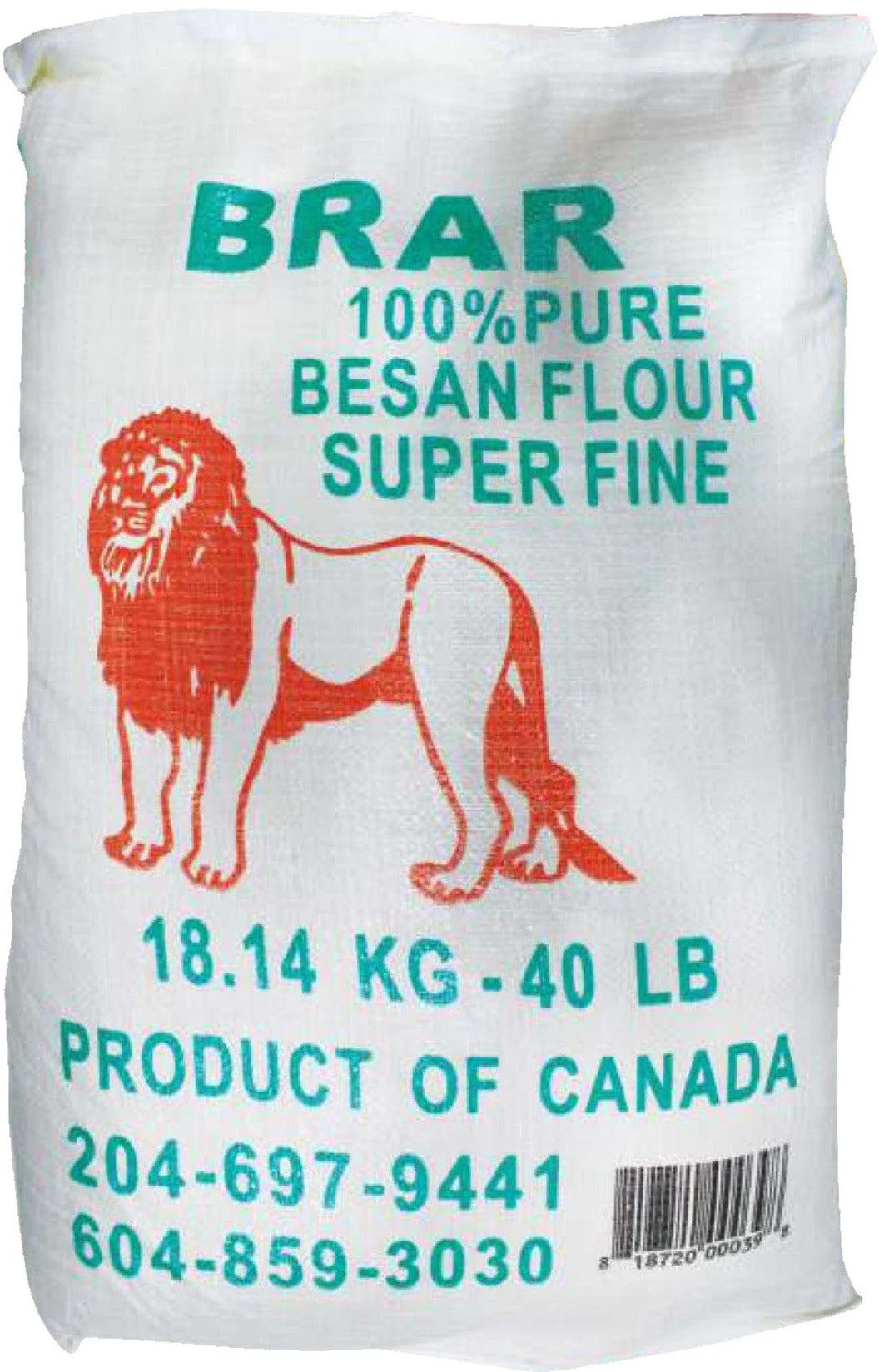
Brar's Besan Flour 40 lb Fine in Bulk at Wholesale Prices
Brar's Besan – Fine is a finely milled chickpea flour supplied in a 40 lb case format, suited to commercial operations with regular, high-volume usage. Besan, also commonly referred to as gram flour or chickpea flour, is a foundational ingredient across South Asian, Middle Eastern, Mediterranean, and increasingly contemporary foodservice kitchens.
The fine grind of this product produces a smooth, consistent texture in finished preparations, making it a commonly stocked dry good in operations where besan flour is used across multiple menu applications or production lines.
What Is Besan (Gram Flour)?
Besan is a flour made from ground dried chickpeas, most commonly from a variety known as chana dal (split Bengal gram). It is naturally gluten-free, high in protein relative to many grain-based flours, and has a characteristic slightly nutty, earthy flavour that is integral to a wide range of traditional and contemporary recipes.
Fine-grind besan, such as Brar's Fine variety, is milled to a finer particle size than coarse or medium variants. This results in a smoother batter and a more uniform texture in cooked applications — a relevant distinction for operations where consistency across large batches is an operational priority.
Brar's is a recognised brand within the South Asian grocery and foodservice supply sector in Canada, with besan flour among its core dry goods offerings.
Common Commercial Applications
Brar's Besan Fine is used across a broad range of professional food environments, including:
- South Asian restaurants and catering kitchens using besan as a base for pakoras, bhajis, kadhi, and besan-based sweets such as ladoo and barfi
- Halal butchers and food counters using besan batter for fried and coated preparations
- Cafés and snack counters incorporating besan into savoury fritters, crepes, and street food-style items
- Food trucks and carts offering South Asian or globally inspired fried snacks and wraps
- Retail bakeries and specialty food producers using chickpea flour in gluten-free baked goods, flatbreads, and specialty products
- Catering companies producing large-batch South Asian menus for events, weddings, and institutional accounts
- Hotels and hospitality kitchens managing diverse dietary menus including gluten-free offerings
- Meal kit and food manufacturing operations incorporating besan into spice coatings, batters, and sauce bases
Product Characteristics
| Feature | Detail |
|---|---|
| Product Name | Brar's Besan – Fine |
| Base Ingredient | Chickpeas (gram/chana dal) |
| Grind Type | Fine |
| Pack Format | Case |
| Pack Size | 40 lb |
| Common Names | Gram flour, chickpea flour, besan flour |
| Naturally | Gluten-free (verify packaging for facility allergen information) |
The 40 lb case format is well-suited to commercial operations with consistent besan usage, reducing per-unit cost and reordering frequency compared to retail-sized packaging. Fine grind is the most commonly requested specification in professional kitchen settings where batter smoothness and coating uniformity are priorities.
Culinary Uses of Fine Besan in Professional Kitchens
Fine besan flour is used across a wide range of cooking techniques and applications in commercial foodservice:
Batters and Coatings
- Pakora and bhaji batters for fried vegetables, paneer, and proteins
- Tempura-style or seasoned coating mixes for fried snack items
- Binding agent in vegetable or legume-based patties and fritters
Sauces and Gravies
- Kadhi (yogurt and besan-based curry sauce), a staple in North Indian and Punjabi cuisine
- Thickening agent in certain South Asian curry bases and gravies
Baked and Flat Goods
- Flatbreads and socca (chickpea flour pancakes from Mediterranean tradition)
- Gluten-free biscuits, crackers, and savoury baked goods
- Besan cheela (savoury crepes popular in Indian breakfast and snack menus)
Confectionery and Sweets
- Besan ladoo and besan barfi — roasted chickpea flour sweets widely prepared for festivals and events
- Mysore pak and similar South Indian sweet preparations
Other Applications
- Natural thickener in soups and stews
- Egg substitute in vegan baking applications when combined with liquid
- Ingredient in spice rub and marinade blends
Why Commercial Kitchens Stock Besan in Bulk
There are several practical reasons professional foodservice operators purchase besan flour in larger case formats:
- Multi-use versatility — A single ingredient applicable across savoury, sweet, fried, baked, and sauce-based preparations reduces the number of specialty flours requiring separate stocking
- Cost efficiency at volume — Bulk dry goods purchasing reduces per-unit cost for operations with regular usage
- Shelf stability — Properly stored dry flour has a practical shelf life that supports forward purchasing and inventory planning
- Consistent output — Standardised commercial milling, as with Brar's besan flour, supports repeatable results across batch production
- Dietary applicability — Naturally gluten-free formulation makes it relevant across diverse menu and dietary programming needs (allergen verification with supplier is always advised)
Bulk and Wholesale Buyer Considerations
For operations purchasing Brar's Besan Fine in 40 lb case quantities, storage in a cool, dry environment away from moisture and strong odours is standard practice for maintaining flour quality through to end use. Dry goods of this type should be transferred to sealed containers upon opening in a commercial pantry setting to minimise exposure to humidity and pests.
Buyers managing multiple product lines or high-volume South Asian menus may benefit from aligning besan flour order cycles with overall dry goods purchasing schedules. As with all bulk dry ingredients, first-in, first-out rotation is recommended to maintain freshness across inventory.
This product is available for wholesale and bulk delivery across the Greater Toronto Area (GTA).
Frequently Asked Questions (FAQs)
Q: What is the difference between fine besan and coarse besan?
A: Fine besan is milled to a smaller particle size, producing a smoother texture in batters, sauces, and baked goods. Coarse besan has a slightly grittier texture and is used in certain traditional recipes where a more textured result is desired. For most commercial batter and sauce applications, fine grind is the more commonly used specification.
Q: Is Brar's Besan Fine gluten-free?
A: Besan is naturally derived from chickpeas and does not contain gluten-bearing grains. However, buyers with customers who have coeliac disease or severe gluten sensitivities should verify facility allergen and cross-contamination information directly with the supplier, as manufacturing environments vary.
Q: How should a 40 lb case of besan be stored in a commercial kitchen?
A: Besan flour should be stored in a cool, dry area away from moisture, heat, and strong-smelling ingredients. Once opened, transferring the flour to a sealed, food-safe container is recommended to maintain freshness and prevent moisture absorption. Standard dry goods storage protocols and FIFO rotation apply.
Q: What is the shelf life of besan flour in a commercial setting?
A: Shelf life varies by manufacturer and storage conditions. Chickpea flour stored in a sealed container in a cool, dry environment typically maintains quality for several months. Buyers should refer to the best-before date printed on the product packaging and manage inventory accordingly.
Q: Can besan flour be used as an egg substitute in commercial baking?
A: In certain vegan or egg-free baking applications, besan mixed with water can function as a binding agent in place of eggs. The ratio and suitability depend on the specific recipe. Operators developing egg-free products should conduct their own testing to confirm results within their specific formulations.
Q: What cuisines commonly use besan flour in commercial menus?
A: Besan flour is a staple in North and South Indian, Pakistani, Bangladeshi, and Sri Lankan cuisines. It is also used in Nepali, Burmese, and East African cooking traditions, as well as in Mediterranean cuisine — notably in dishes like socca and panisse. Its use in gluten-free and plant-based cooking has also expanded its presence in contemporary North American foodservice.
Q: Is Brar's a widely distributed brand in the Canadian foodservice market?
A: Brar's is a Canadian brand with established distribution across South Asian grocery and foodservice supply channels, particularly in markets with significant South Asian communities such as the Greater Toronto Area. Their dry goods range, including besan flour, is stocked by a number of wholesale and retail suppliers serving professional kitchen operators.
Q: How does fine besan perform in high-volume frying applications?
A: Fine besan is commonly used in commercial frying operations for pakoras, bhajis, and coated snack items. The fine grind produces a smooth batter that adheres consistently to ingredients. As with any frying application, oil temperature management and batter consistency are the primary variables affecting finished product texture and oil absorption
Description
Brar's Besan Flour 40 lb Fine in Bulk at Wholesale Prices
Brar's Besan – Fine is a finely milled chickpea flour supplied in a 40 lb case format, suited to commercial operations with regular, high-volume usage. Besan, also commonly referred to as gram flour or chickpea flour, is a foundational ingredient across South Asian, Middle Eastern, Mediterranean, and increasingly contemporary foodservice kitchens.
The fine grind of this product produces a smooth, consistent texture in finished preparations, making it a commonly stocked dry good in operations where besan flour is used across multiple menu applications or production lines.
What Is Besan (Gram Flour)?
Besan is a flour made from ground dried chickpeas, most commonly from a variety known as chana dal (split Bengal gram). It is naturally gluten-free, high in protein relative to many grain-based flours, and has a characteristic slightly nutty, earthy flavour that is integral to a wide range of traditional and contemporary recipes.
Fine-grind besan, such as Brar's Fine variety, is milled to a finer particle size than coarse or medium variants. This results in a smoother batter and a more uniform texture in cooked applications — a relevant distinction for operations where consistency across large batches is an operational priority.
Brar's is a recognised brand within the South Asian grocery and foodservice supply sector in Canada, with besan flour among its core dry goods offerings.
Common Commercial Applications
Brar's Besan Fine is used across a broad range of professional food environments, including:
- South Asian restaurants and catering kitchens using besan as a base for pakoras, bhajis, kadhi, and besan-based sweets such as ladoo and barfi
- Halal butchers and food counters using besan batter for fried and coated preparations
- Cafés and snack counters incorporating besan into savoury fritters, crepes, and street food-style items
- Food trucks and carts offering South Asian or globally inspired fried snacks and wraps
- Retail bakeries and specialty food producers using chickpea flour in gluten-free baked goods, flatbreads, and specialty products
- Catering companies producing large-batch South Asian menus for events, weddings, and institutional accounts
- Hotels and hospitality kitchens managing diverse dietary menus including gluten-free offerings
- Meal kit and food manufacturing operations incorporating besan into spice coatings, batters, and sauce bases
Product Characteristics
| Feature | Detail |
|---|---|
| Product Name | Brar's Besan – Fine |
| Base Ingredient | Chickpeas (gram/chana dal) |
| Grind Type | Fine |
| Pack Format | Case |
| Pack Size | 40 lb |
| Common Names | Gram flour, chickpea flour, besan flour |
| Naturally | Gluten-free (verify packaging for facility allergen information) |
The 40 lb case format is well-suited to commercial operations with consistent besan usage, reducing per-unit cost and reordering frequency compared to retail-sized packaging. Fine grind is the most commonly requested specification in professional kitchen settings where batter smoothness and coating uniformity are priorities.
Culinary Uses of Fine Besan in Professional Kitchens
Fine besan flour is used across a wide range of cooking techniques and applications in commercial foodservice:
Batters and Coatings
- Pakora and bhaji batters for fried vegetables, paneer, and proteins
- Tempura-style or seasoned coating mixes for fried snack items
- Binding agent in vegetable or legume-based patties and fritters
Sauces and Gravies
- Kadhi (yogurt and besan-based curry sauce), a staple in North Indian and Punjabi cuisine
- Thickening agent in certain South Asian curry bases and gravies
Baked and Flat Goods
- Flatbreads and socca (chickpea flour pancakes from Mediterranean tradition)
- Gluten-free biscuits, crackers, and savoury baked goods
- Besan cheela (savoury crepes popular in Indian breakfast and snack menus)
Confectionery and Sweets
- Besan ladoo and besan barfi — roasted chickpea flour sweets widely prepared for festivals and events
- Mysore pak and similar South Indian sweet preparations
Other Applications
- Natural thickener in soups and stews
- Egg substitute in vegan baking applications when combined with liquid
- Ingredient in spice rub and marinade blends
Why Commercial Kitchens Stock Besan in Bulk
There are several practical reasons professional foodservice operators purchase besan flour in larger case formats:
- Multi-use versatility — A single ingredient applicable across savoury, sweet, fried, baked, and sauce-based preparations reduces the number of specialty flours requiring separate stocking
- Cost efficiency at volume — Bulk dry goods purchasing reduces per-unit cost for operations with regular usage
- Shelf stability — Properly stored dry flour has a practical shelf life that supports forward purchasing and inventory planning
- Consistent output — Standardised commercial milling, as with Brar's besan flour, supports repeatable results across batch production
- Dietary applicability — Naturally gluten-free formulation makes it relevant across diverse menu and dietary programming needs (allergen verification with supplier is always advised)
Bulk and Wholesale Buyer Considerations
For operations purchasing Brar's Besan Fine in 40 lb case quantities, storage in a cool, dry environment away from moisture and strong odours is standard practice for maintaining flour quality through to end use. Dry goods of this type should be transferred to sealed containers upon opening in a commercial pantry setting to minimise exposure to humidity and pests.
Buyers managing multiple product lines or high-volume South Asian menus may benefit from aligning besan flour order cycles with overall dry goods purchasing schedules. As with all bulk dry ingredients, first-in, first-out rotation is recommended to maintain freshness across inventory.
This product is available for wholesale and bulk delivery across the Greater Toronto Area (GTA).
Frequently Asked Questions (FAQs)
Q: What is the difference between fine besan and coarse besan?
A: Fine besan is milled to a smaller particle size, producing a smoother texture in batters, sauces, and baked goods. Coarse besan has a slightly grittier texture and is used in certain traditional recipes where a more textured result is desired. For most commercial batter and sauce applications, fine grind is the more commonly used specification.
Q: Is Brar's Besan Fine gluten-free?
A: Besan is naturally derived from chickpeas and does not contain gluten-bearing grains. However, buyers with customers who have coeliac disease or severe gluten sensitivities should verify facility allergen and cross-contamination information directly with the supplier, as manufacturing environments vary.
Q: How should a 40 lb case of besan be stored in a commercial kitchen?
A: Besan flour should be stored in a cool, dry area away from moisture, heat, and strong-smelling ingredients. Once opened, transferring the flour to a sealed, food-safe container is recommended to maintain freshness and prevent moisture absorption. Standard dry goods storage protocols and FIFO rotation apply.
Q: What is the shelf life of besan flour in a commercial setting?
A: Shelf life varies by manufacturer and storage conditions. Chickpea flour stored in a sealed container in a cool, dry environment typically maintains quality for several months. Buyers should refer to the best-before date printed on the product packaging and manage inventory accordingly.
Q: Can besan flour be used as an egg substitute in commercial baking?
A: In certain vegan or egg-free baking applications, besan mixed with water can function as a binding agent in place of eggs. The ratio and suitability depend on the specific recipe. Operators developing egg-free products should conduct their own testing to confirm results within their specific formulations.
Q: What cuisines commonly use besan flour in commercial menus?
A: Besan flour is a staple in North and South Indian, Pakistani, Bangladeshi, and Sri Lankan cuisines. It is also used in Nepali, Burmese, and East African cooking traditions, as well as in Mediterranean cuisine — notably in dishes like socca and panisse. Its use in gluten-free and plant-based cooking has also expanded its presence in contemporary North American foodservice.
Q: Is Brar's a widely distributed brand in the Canadian foodservice market?
A: Brar's is a Canadian brand with established distribution across South Asian grocery and foodservice supply channels, particularly in markets with significant South Asian communities such as the Greater Toronto Area. Their dry goods range, including besan flour, is stocked by a number of wholesale and retail suppliers serving professional kitchen operators.
Q: How does fine besan perform in high-volume frying applications?
A: Fine besan is commonly used in commercial frying operations for pakoras, bhajis, and coated snack items. The fine grind produces a smooth batter that adheres consistently to ingredients. As with any frying application, oil temperature management and batter consistency are the primary variables affecting finished product texture and oil absorption