Original: $5.36
-65%$5.36
$1.88The Story
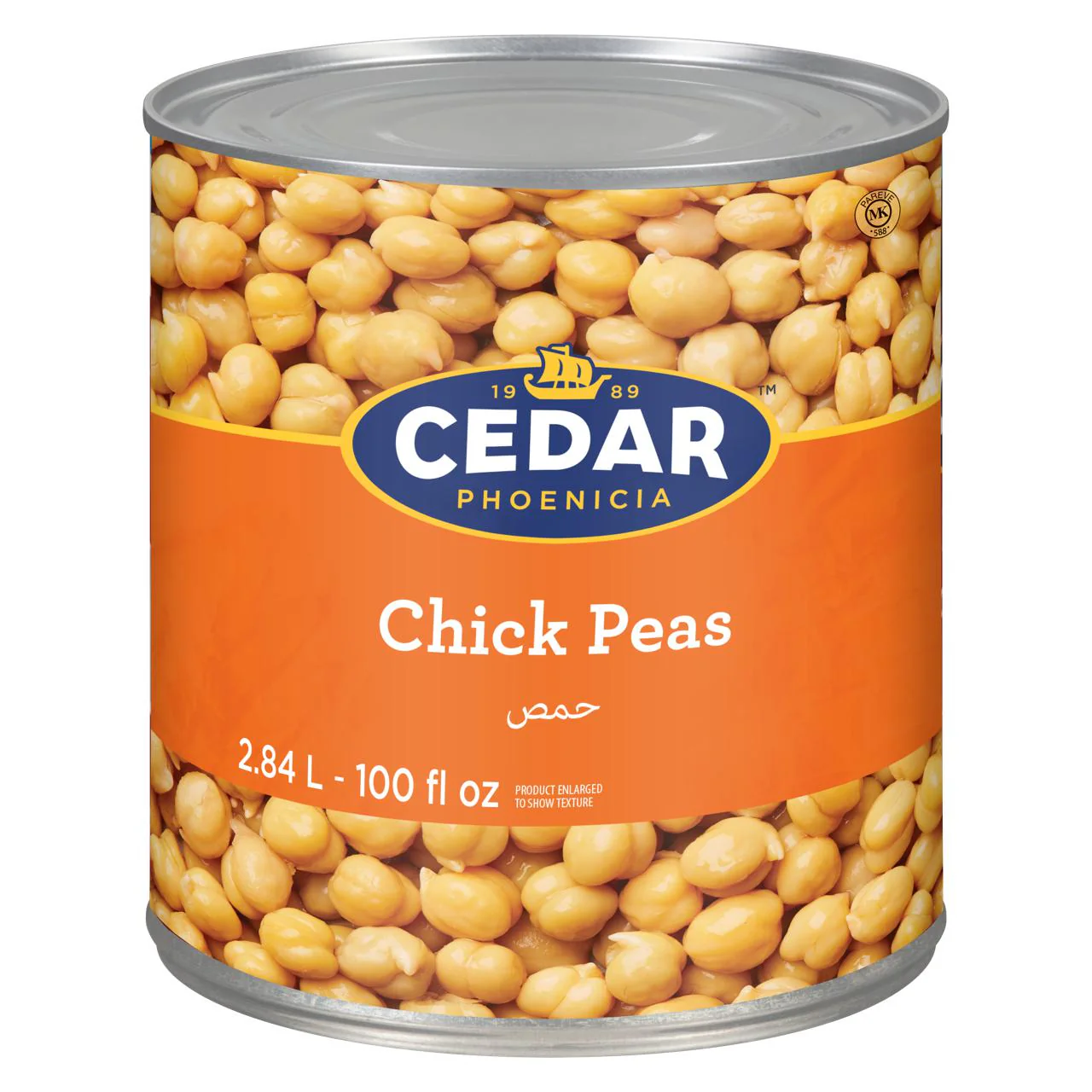
Cedar Canned Chickpeas/Garbanzo 100 oz
Product Overview
Cedar Chick Peas – Large are commercially canned chickpeas supplied in a 100 oz format, with case purchasing available in 6 x 100 oz units. Also known as canned garbanzo beans, chickpeas in this format are a pantry staple across a wide range of foodservice, catering, and institutional kitchen environments where consistent volume, shelf stability, and preparation efficiency are operational priorities.
Cedar is a recognised brand in the Canadian foodservice supply market, particularly within Middle Eastern, Mediterranean, and South Asian food categories. The large chickpea variety in this format is suited to high-volume applications where bean size, texture, and yield consistency matter in finished dishes.
What Are Canned Large Chickpeas?
Chickpeas (Cicer arietinum), sometimes referred to as garbanzo beans, are a legume widely used across global culinary traditions. The canned format means the beans have been pre-cooked, processed, and sealed in liquid — typically water with added salt — making them ready to use directly from the can after draining and rinsing, or incorporated directly into hot preparations.
The "large" designation refers to the bean size grade, which is relevant in foodservice applications where visual presentation, mouthfeel, and portion consistency are factors in menu planning. Larger chickpeas are commonly preferred in dishes where the whole bean is prominently featured rather than mashed or blended.
Canned chickpeas offer a practical alternative to dried chickpeas in commercial kitchens, eliminating the need for overnight soaking and extended cooking times, which can be a meaningful advantage in high-throughput service environments.
Common Commercial Applications
Cedar canned chickpeas in the 100 oz format are used across a broad range of professional food operations, including:
- Middle Eastern and Mediterranean restaurants using chickpeas as a primary ingredient in hummus, falafel bases, stews, and mezze preparations
- South Asian restaurants and catering operations incorporating chickpeas into chana masala, curries, and street food-style dishes
- Cafés and fast-casual concepts offering grain bowls, wraps, and plant-based menu items featuring whole chickpeas
- Catering companies requiring large-batch legume preparation for buffet, event, or institutional service
- Food trucks and carts specialising in globally inspired or plant-forward menus
- Grocery retailers and deli counters using canned chickpeas in prepared food programs and ready-to-eat salad or mezze offerings
- Institutional kitchens in healthcare, education, or corporate dining where plant-based protein sources are incorporated into regular menu cycles
- Hotels and hospitality operations supporting diverse dietary needs across buffet and à la carte service
Product Characteristics
| Feature | Detail |
|---|---|
| Product Type | Canned large chickpeas (garbanzo beans) |
| Brand | Cedar |
| Unit Size | 100 oz |
| Case Format | 6 x 100 oz |
| Form | Pre-cooked, canned in liquid |
| Common Names | Canned chickpeas, canned garbanzo, canned garbanzo beans |
| Delivery Coverage | Across Canada |
The 100 oz can size is a commercial foodservice format, yielding a significantly higher volume per unit compared to retail-sized cans, which reduces per-serving ingredient costs and the frequency of restocking in high-use kitchens. The 6-unit case format supports bulk purchasing and consolidated inventory management.
Culinary Uses and Preparation in Commercial Settings
Cedar large chickpeas can be used across a wide variety of savoury preparations. Common applications in professional kitchens include:
- Hummus production — drained and blended with tahini, lemon, and garlic for fresh or batch-prepared hummus
- Salads and grain bowls — used whole as a protein component in cold or warm composed dishes
- Soups and stews — added directly to simmering broths and sauce bases
- Curries and braised dishes — incorporated into spiced preparations such as chana masala or chickpea tagine
- Roasted chickpeas — drained, seasoned, and roasted for use as a topping, snack component, or textural garnish
- Falafel bases — used in modified falafel preparations where a softer texture is acceptable, noting that traditional falafel typically uses soaked dried chickpeas
- Plant-based protein substitutes — incorporated into wraps, sandwiches, and bowls as a meat-free protein source
Canned chickpeas should be drained and rinsed before most applications to reduce sodium content from the packing liquid and to improve flavour clarity in finished dishes. The drained liquid (aquafaba) is sometimes retained in specialty baking and culinary applications.
Why Foodservice Operators Source Canned Chickpeas in Bulk
There are several operational reasons commercial kitchens and foodservice operators regularly stock canned garbanzo beans in large-format units:
- Labour and time savings — No soaking or extended cooking required compared to dried legumes
- Consistent yield — Canned chickpeas provide a predictable drained weight and texture across batches
- Shelf stability — Long shelf life supports forward purchasing and reduces the risk of spoilage
- Year-round availability — Canned format is not subject to seasonal availability constraints
- Menu versatility — One SKU usable across multiple menu categories including appetisers, mains, salads, and snacks
- Plant-based menu support — A cost-effective protein source for vegetarian, vegan, and flexitarian menu programming
Bulk and Wholesale Buyer Considerations
For operations purchasing Cedar Chick Peas in case quantities, the 6 x 100 oz format supports consolidated storage and efficient inventory rotation on a FIFO (first-in, first-out) basis. As a shelf-stable canned product, storage in a cool, dry environment away from temperature extremes is standard practice for maintaining product integrity through to the use date.
Buyers with consistent weekly chickpea usage across multiple preparation applications — from hummus programs to curry service — may find the case format well-aligned with operational volume requirements. Operators should confirm current stock availability and lead times when planning around high-demand periods or large-event catering requirements.
This product is available for wholesale and bulk delivery across Canada.
Frequently Asked Questions (FAQs)
Q: What is the difference between canned chickpeas and canned garbanzo beans?
A: There is no difference — chickpeas and garbanzo beans are two names for the same legume (Cicer arietinum). The term "garbanzo" is more commonly used in Spanish and American culinary contexts, while "chickpea" is the standard term in Canadian, British, and South Asian food traditions. Cedar canned chickpeas and canned garbanzo beans refer to the same product.
Q: What is the drained weight of a 100 oz can of chickpeas?
A: Drained weight will vary slightly by product lot, but as a general reference, canned chickpeas typically yield approximately 55–60% of the stated net weight after draining the packing liquid. Operators calculating recipe costs and portion yields should factor in drained weight rather than total can weight for accurate costing.
Q: Do canned chickpeas need to be cooked before use?
A: No. Canned chickpeas are pre-cooked during the canning process and are ready to eat after draining and rinsing. They can be used directly in cold preparations such as salads or incorporated into hot dishes where they will be further heated as part of the cooking process.
Q: Should the liquid in canned chickpeas be discarded?
A: In most commercial kitchen applications, the packing liquid is drained and the chickpeas are rinsed before use. The liquid, known as aquafaba, is retained in some specialty culinary applications — particularly in plant-based baking where it functions as an egg substitute. For standard foodservice use, draining and rinsing is the common practice.
Q: How should canned chickpeas be stored after the can is opened?
A: Once opened, unused chickpeas should be transferred to a food-safe container, covered with fresh water or broth, and refrigerated. Standard food safety practice recommends using opened canned goods within two to three days. Operators should follow local food safety guidelines and their establishment's internal protocols for opened tin storage.
Q: What is the shelf life of Cedar canned chickpeas?
A: As a commercially canned product, Cedar large chickpeas have a multi-year shelf life when stored unopened in appropriate conditions — typically a cool, dry location away from direct sunlight and temperature fluctuations. The best-before date printed on the can should be referenced for each specific lot.
Q: Are Cedar canned chickpeas available for delivery across Canada?
A: Yes. This product is available for wholesale and bulk delivery across Canada. Buyers outside the GTA are encouraged to confirm lead times and minimum order quantities applicable to their region when placing orders.
Q: Can canned chickpeas be used to make hummus in commercial quantities?
A: Yes. Large-format canned chickpeas are a common base ingredient for commercial hummus production. The pre-cooked, soft texture of canned chickpeas makes them well-suited for high-volume blending applications. Some operators prefer to peel the chickpeas before blending for a smoother finished texture, though this step varies by production standard and available labour.
Description
Cedar Canned Chickpeas/Garbanzo 100 oz
Product Overview
Cedar Chick Peas – Large are commercially canned chickpeas supplied in a 100 oz format, with case purchasing available in 6 x 100 oz units. Also known as canned garbanzo beans, chickpeas in this format are a pantry staple across a wide range of foodservice, catering, and institutional kitchen environments where consistent volume, shelf stability, and preparation efficiency are operational priorities.
Cedar is a recognised brand in the Canadian foodservice supply market, particularly within Middle Eastern, Mediterranean, and South Asian food categories. The large chickpea variety in this format is suited to high-volume applications where bean size, texture, and yield consistency matter in finished dishes.
What Are Canned Large Chickpeas?
Chickpeas (Cicer arietinum), sometimes referred to as garbanzo beans, are a legume widely used across global culinary traditions. The canned format means the beans have been pre-cooked, processed, and sealed in liquid — typically water with added salt — making them ready to use directly from the can after draining and rinsing, or incorporated directly into hot preparations.
The "large" designation refers to the bean size grade, which is relevant in foodservice applications where visual presentation, mouthfeel, and portion consistency are factors in menu planning. Larger chickpeas are commonly preferred in dishes where the whole bean is prominently featured rather than mashed or blended.
Canned chickpeas offer a practical alternative to dried chickpeas in commercial kitchens, eliminating the need for overnight soaking and extended cooking times, which can be a meaningful advantage in high-throughput service environments.
Common Commercial Applications
Cedar canned chickpeas in the 100 oz format are used across a broad range of professional food operations, including:
- Middle Eastern and Mediterranean restaurants using chickpeas as a primary ingredient in hummus, falafel bases, stews, and mezze preparations
- South Asian restaurants and catering operations incorporating chickpeas into chana masala, curries, and street food-style dishes
- Cafés and fast-casual concepts offering grain bowls, wraps, and plant-based menu items featuring whole chickpeas
- Catering companies requiring large-batch legume preparation for buffet, event, or institutional service
- Food trucks and carts specialising in globally inspired or plant-forward menus
- Grocery retailers and deli counters using canned chickpeas in prepared food programs and ready-to-eat salad or mezze offerings
- Institutional kitchens in healthcare, education, or corporate dining where plant-based protein sources are incorporated into regular menu cycles
- Hotels and hospitality operations supporting diverse dietary needs across buffet and à la carte service
Product Characteristics
| Feature | Detail |
|---|---|
| Product Type | Canned large chickpeas (garbanzo beans) |
| Brand | Cedar |
| Unit Size | 100 oz |
| Case Format | 6 x 100 oz |
| Form | Pre-cooked, canned in liquid |
| Common Names | Canned chickpeas, canned garbanzo, canned garbanzo beans |
| Delivery Coverage | Across Canada |
The 100 oz can size is a commercial foodservice format, yielding a significantly higher volume per unit compared to retail-sized cans, which reduces per-serving ingredient costs and the frequency of restocking in high-use kitchens. The 6-unit case format supports bulk purchasing and consolidated inventory management.
Culinary Uses and Preparation in Commercial Settings
Cedar large chickpeas can be used across a wide variety of savoury preparations. Common applications in professional kitchens include:
- Hummus production — drained and blended with tahini, lemon, and garlic for fresh or batch-prepared hummus
- Salads and grain bowls — used whole as a protein component in cold or warm composed dishes
- Soups and stews — added directly to simmering broths and sauce bases
- Curries and braised dishes — incorporated into spiced preparations such as chana masala or chickpea tagine
- Roasted chickpeas — drained, seasoned, and roasted for use as a topping, snack component, or textural garnish
- Falafel bases — used in modified falafel preparations where a softer texture is acceptable, noting that traditional falafel typically uses soaked dried chickpeas
- Plant-based protein substitutes — incorporated into wraps, sandwiches, and bowls as a meat-free protein source
Canned chickpeas should be drained and rinsed before most applications to reduce sodium content from the packing liquid and to improve flavour clarity in finished dishes. The drained liquid (aquafaba) is sometimes retained in specialty baking and culinary applications.
Why Foodservice Operators Source Canned Chickpeas in Bulk
There are several operational reasons commercial kitchens and foodservice operators regularly stock canned garbanzo beans in large-format units:
- Labour and time savings — No soaking or extended cooking required compared to dried legumes
- Consistent yield — Canned chickpeas provide a predictable drained weight and texture across batches
- Shelf stability — Long shelf life supports forward purchasing and reduces the risk of spoilage
- Year-round availability — Canned format is not subject to seasonal availability constraints
- Menu versatility — One SKU usable across multiple menu categories including appetisers, mains, salads, and snacks
- Plant-based menu support — A cost-effective protein source for vegetarian, vegan, and flexitarian menu programming
Bulk and Wholesale Buyer Considerations
For operations purchasing Cedar Chick Peas in case quantities, the 6 x 100 oz format supports consolidated storage and efficient inventory rotation on a FIFO (first-in, first-out) basis. As a shelf-stable canned product, storage in a cool, dry environment away from temperature extremes is standard practice for maintaining product integrity through to the use date.
Buyers with consistent weekly chickpea usage across multiple preparation applications — from hummus programs to curry service — may find the case format well-aligned with operational volume requirements. Operators should confirm current stock availability and lead times when planning around high-demand periods or large-event catering requirements.
This product is available for wholesale and bulk delivery across Canada.
Frequently Asked Questions (FAQs)
Q: What is the difference between canned chickpeas and canned garbanzo beans?
A: There is no difference — chickpeas and garbanzo beans are two names for the same legume (Cicer arietinum). The term "garbanzo" is more commonly used in Spanish and American culinary contexts, while "chickpea" is the standard term in Canadian, British, and South Asian food traditions. Cedar canned chickpeas and canned garbanzo beans refer to the same product.
Q: What is the drained weight of a 100 oz can of chickpeas?
A: Drained weight will vary slightly by product lot, but as a general reference, canned chickpeas typically yield approximately 55–60% of the stated net weight after draining the packing liquid. Operators calculating recipe costs and portion yields should factor in drained weight rather than total can weight for accurate costing.
Q: Do canned chickpeas need to be cooked before use?
A: No. Canned chickpeas are pre-cooked during the canning process and are ready to eat after draining and rinsing. They can be used directly in cold preparations such as salads or incorporated into hot dishes where they will be further heated as part of the cooking process.
Q: Should the liquid in canned chickpeas be discarded?
A: In most commercial kitchen applications, the packing liquid is drained and the chickpeas are rinsed before use. The liquid, known as aquafaba, is retained in some specialty culinary applications — particularly in plant-based baking where it functions as an egg substitute. For standard foodservice use, draining and rinsing is the common practice.
Q: How should canned chickpeas be stored after the can is opened?
A: Once opened, unused chickpeas should be transferred to a food-safe container, covered with fresh water or broth, and refrigerated. Standard food safety practice recommends using opened canned goods within two to three days. Operators should follow local food safety guidelines and their establishment's internal protocols for opened tin storage.
Q: What is the shelf life of Cedar canned chickpeas?
A: As a commercially canned product, Cedar large chickpeas have a multi-year shelf life when stored unopened in appropriate conditions — typically a cool, dry location away from direct sunlight and temperature fluctuations. The best-before date printed on the can should be referenced for each specific lot.
Q: Are Cedar canned chickpeas available for delivery across Canada?
A: Yes. This product is available for wholesale and bulk delivery across Canada. Buyers outside the GTA are encouraged to confirm lead times and minimum order quantities applicable to their region when placing orders.
Q: Can canned chickpeas be used to make hummus in commercial quantities?
A: Yes. Large-format canned chickpeas are a common base ingredient for commercial hummus production. The pre-cooked, soft texture of canned chickpeas makes them well-suited for high-volume blending applications. Some operators prefer to peel the chickpeas before blending for a smoother finished texture, though this step varies by production standard and available labour.