The Story
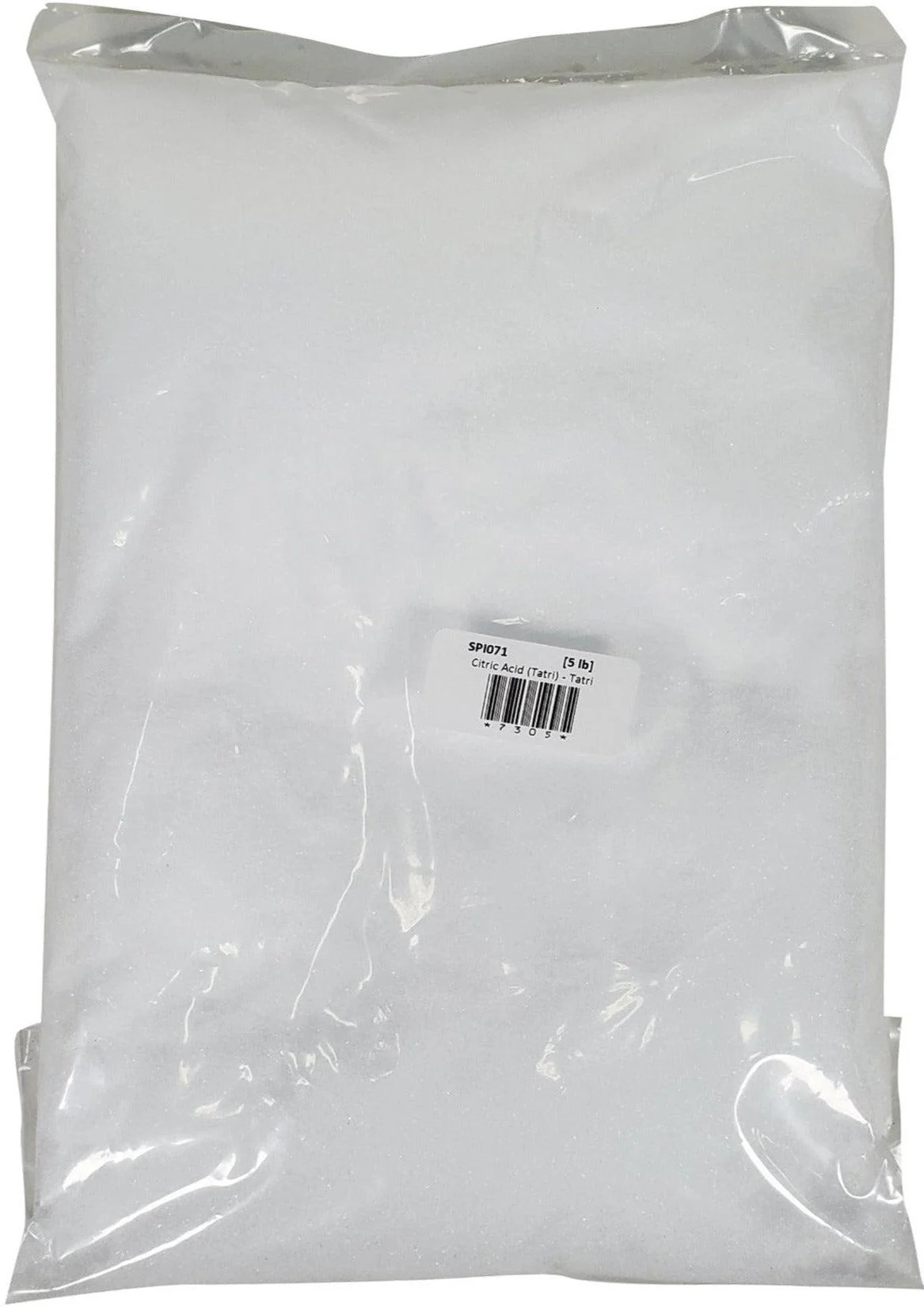
Bulk Citric Acid (Tatri Powder) 5-55lb
Product Overview
Citric Acid (Tatri) – Anhydrous is a food-grade, dry acidulant supplied in a 55 lb case format, suited to commercial-scale purchasing across foodservice, manufacturing, and institutional food operations. Known as tatri powder in South Asian culinary and household contexts, citric acid is one of the most widely used food-grade acids in the commercial food industry, valued for its sour flavouring properties, preservative function, and acidity-regulating characteristics.
The anhydrous form refers to citric acid in its water-free crystalline state, as distinct from citric acid monohydrate, which contains a molecule of water within its crystal structure. Anhydrous citric acid has a slightly higher concentration by weight and is the more commonly used form in dry food formulations and industrial food processing applications.
What Is Citric Acid (Tatri)?
Citric acid is a naturally occurring organic acid found in citrus fruits such as lemons, limes, and grapefruits. In commercial food production, citric acid is manufactured through a fermentation process and is available as a fine to coarse white crystalline powder.
In South Asian cooking and food culture, citric acid is commonly referred to as tatri or tatri powder, and is used as a souring agent in place of, or alongside, tamarind, dried mango powder (amchur), and lemon juice. It is a staple ingredient in home kitchens and commercial South Asian food operations alike.
As a food additive, citric acid is classified as an acidulant, flavouring agent, and preservative, and appears in the ingredient lists of a wide range of processed and prepared food products globally.
Common Commercial Applications
Bulk citric acid is used across a broad range of professional and industrial food environments, including:
- Restaurants and commercial kitchens using tatri powder as a souring agent in South Asian, Middle Eastern, and fusion cuisine
- Food manufacturers and processors incorporating citric acid into sauces, condiments, preserves, jams, and canned goods for acidity regulation and preservation
- Beverage manufacturers and juice operations using citric acid to adjust tartness and pH in soft drinks, concentrates, and powdered drink mixes
- Catering companies preparing large-batch spice blends, chutneys, marinades, and pickled products
- Confectionery producers using citric acid in sour candy, gummies, and hard candy formulations
- Cafés and specialty beverage operations incorporating citric acid into house-made syrups, lemonades, and cold beverages
- Bakeries using citric acid as a dough conditioner and leavening aid in certain bread and pastry applications
- Institutional kitchens managing large-volume food production where a shelf-stable, dry souring agent is operationally practical
- Food retailers and ethnic grocery wholesalers distributing tatri powder to South Asian, Middle Eastern, and specialty food customer bases
Product Characteristics
| Feature | Detail |
|---|---|
| Product Type | Food-grade citric acid, anhydrous |
| Common Name | Tatri, tatri powder, lemon salt |
| Form | White crystalline powder |
| Pack Size | 55 lb case |
| Grade | Food-grade |
| Solubility | Highly water-soluble |
| Function | Acidulant, souring agent, preservative, pH regulator |
The 55 lb case format supports operations with high or consistent usage volumes, reducing per-unit cost compared to smaller retail-sized packaging and minimising reorder frequency for operations with established batch production schedules.
Functional Uses of Citric Acid in Food Production
In professional food production, citric acid serves several distinct technical functions depending on the application:
- Souring and flavour enhancement — Adds tartness and brightness to savoury dishes, beverages, confectionery, and condiments
- pH regulation — Lowers the pH of food products to inhibit microbial activity and extend shelf life
- Preservation — Used in jams, preserves, and canned goods to support food safety at lower heat processing levels
- Chelation — Binds metal ions that can cause oxidation and discolouration in processed foods
- Emulsification support — Used in cheese and dairy processing to support texture and melt characteristics
- Dough conditioning — Applied in certain baked goods to strengthen gluten structure and improve crumb texture
- Flavour masking — Used to balance or offset bitterness and off-notes in finished formulations
- Beverage acidulation — Adjusts tartness levels in carbonated drinks, powdered beverage mixes, and juice-based products
Tatri Powder in South Asian Foodservice
Within South Asian commercial cooking, tatri is a well-established souring agent used across Pakistani, Indian, and broader subcontinental cuisines. It is used in the preparation of dishes such as chaat, dahi puri, tamarind chutney, pickles (achar), spiced rice, lentil dishes, and certain meat marinades where a clean, concentrated sour note is desired.
For foodservice operators running South Asian restaurants, catering operations, or food manufacturing for ethnic grocery retail, sourcing bulk citric acid wholesale in the 55 lb case format supports uninterrupted production without the logistical overhead of frequent small-quantity orders.
Bulk and Wholesale Buyer Considerations
For operations purchasing anhydrous citric acid in the 55 lb case format, storage in a cool, dry environment away from moisture and humidity is standard practice. Citric acid is hygroscopic, meaning it can absorb moisture from the surrounding air and clump if not stored in properly sealed, airtight containers. Once opened, the case contents should be transferred to a sealed storage vessel to maintain product flowability and shelf stability.
Buyers operating across multiple production lines or kitchen locations may benefit from calculating monthly usage volumes before establishing order quantities, particularly when sourcing citric acid wholesale to manage inventory turnover effectively. This product is available for wholesale delivery across Canada.
Frequently Asked Questions (FAQs)
Q: What is the difference between anhydrous citric acid and citric acid monohydrate?
Anhydrous citric acid contains no water molecules within its crystal structure, while citric acid monohydrate contains one water molecule per molecule of citric acid. Anhydrous citric acid has a slightly higher concentration by weight and is more commonly used in dry mixes, powdered formulations, and high-volume food manufacturing. For most food applications, either form is functionally suitable, but anhydrous is generally preferred where moisture content in the final product must be tightly controlled.
Q: Is this citric acid food-grade?
Yes, this product is food-grade citric acid. However, buyers are advised to review product documentation and lot-specific certificates of analysis for their own quality assurance, regulatory, and labelling requirements. Intended use should always be confirmed against applicable food safety standards in the relevant jurisdiction.
Q: Can citric acid be used as a direct substitute for lemon juice or tamarind in recipes?
Citric acid can replicate the sour or acidic component of lemon juice and tamarind in many applications, but it does not replicate the full flavour profile of either ingredient. Lemon juice and tamarind contain additional flavour compounds beyond acidity. In applications where sourness is the primary functional requirement — such as chaat seasoning or pickled products — citric acid (tatri) is widely used as a practical substitute. Recipe adjustment is typically required, as citric acid is significantly more concentrated by volume than liquid souring agents.
Q: How should bulk citric acid be stored in a commercial facility?
Bulk citric acid should be stored in a cool, dry environment in a sealed, airtight container to prevent moisture absorption and clumping. Direct exposure to humidity, steam, or wet kitchen environments can cause the powder to cake. Keeping the product away from strong-smelling ingredients is also advisable, as dry powders can absorb ambient odours over time. First-in, first-out rotation practices apply as with other dry pantry ingredients.
Q: What is the shelf life of food-grade anhydrous citric acid?
When stored properly in sealed, dry conditions, food-grade anhydrous citric acid typically has a shelf life of two to three years from the date of manufacture. Buyers should confirm the specific shelf life and manufacturing date from product documentation at time of order, and rotate stock accordingly.
Q: Is citric acid (tatri) safe for use in food preparation?
Citric acid is widely recognised as a safe food additive and has been used in food production globally for well over a century. It appears on the ingredient lists of a very broad range of processed and prepared food products. As with any food ingredient, operators should follow applicable food safety handling practices, use it within intended applications, and consult product documentation relevant to their regulatory environment.
Q: Can this product be used in beverage manufacturing or drink mixes?
Yes. Citric acid is one of the most commonly used acidulants in beverage formulation, including carbonated soft drinks, powdered drink mixes, electrolyte beverages, flavoured water, and concentrated juice-based products. It dissolves readily in water, making it practical for liquid applications as well as dry blending.
Q: Where is this product delivered?
This product is available for bulk and wholesale delivery across Canada.
Description
Bulk Citric Acid (Tatri Powder) 5-55lb
Product Overview
Citric Acid (Tatri) – Anhydrous is a food-grade, dry acidulant supplied in a 55 lb case format, suited to commercial-scale purchasing across foodservice, manufacturing, and institutional food operations. Known as tatri powder in South Asian culinary and household contexts, citric acid is one of the most widely used food-grade acids in the commercial food industry, valued for its sour flavouring properties, preservative function, and acidity-regulating characteristics.
The anhydrous form refers to citric acid in its water-free crystalline state, as distinct from citric acid monohydrate, which contains a molecule of water within its crystal structure. Anhydrous citric acid has a slightly higher concentration by weight and is the more commonly used form in dry food formulations and industrial food processing applications.
What Is Citric Acid (Tatri)?
Citric acid is a naturally occurring organic acid found in citrus fruits such as lemons, limes, and grapefruits. In commercial food production, citric acid is manufactured through a fermentation process and is available as a fine to coarse white crystalline powder.
In South Asian cooking and food culture, citric acid is commonly referred to as tatri or tatri powder, and is used as a souring agent in place of, or alongside, tamarind, dried mango powder (amchur), and lemon juice. It is a staple ingredient in home kitchens and commercial South Asian food operations alike.
As a food additive, citric acid is classified as an acidulant, flavouring agent, and preservative, and appears in the ingredient lists of a wide range of processed and prepared food products globally.
Common Commercial Applications
Bulk citric acid is used across a broad range of professional and industrial food environments, including:
- Restaurants and commercial kitchens using tatri powder as a souring agent in South Asian, Middle Eastern, and fusion cuisine
- Food manufacturers and processors incorporating citric acid into sauces, condiments, preserves, jams, and canned goods for acidity regulation and preservation
- Beverage manufacturers and juice operations using citric acid to adjust tartness and pH in soft drinks, concentrates, and powdered drink mixes
- Catering companies preparing large-batch spice blends, chutneys, marinades, and pickled products
- Confectionery producers using citric acid in sour candy, gummies, and hard candy formulations
- Cafés and specialty beverage operations incorporating citric acid into house-made syrups, lemonades, and cold beverages
- Bakeries using citric acid as a dough conditioner and leavening aid in certain bread and pastry applications
- Institutional kitchens managing large-volume food production where a shelf-stable, dry souring agent is operationally practical
- Food retailers and ethnic grocery wholesalers distributing tatri powder to South Asian, Middle Eastern, and specialty food customer bases
Product Characteristics
| Feature | Detail |
|---|---|
| Product Type | Food-grade citric acid, anhydrous |
| Common Name | Tatri, tatri powder, lemon salt |
| Form | White crystalline powder |
| Pack Size | 55 lb case |
| Grade | Food-grade |
| Solubility | Highly water-soluble |
| Function | Acidulant, souring agent, preservative, pH regulator |
The 55 lb case format supports operations with high or consistent usage volumes, reducing per-unit cost compared to smaller retail-sized packaging and minimising reorder frequency for operations with established batch production schedules.
Functional Uses of Citric Acid in Food Production
In professional food production, citric acid serves several distinct technical functions depending on the application:
- Souring and flavour enhancement — Adds tartness and brightness to savoury dishes, beverages, confectionery, and condiments
- pH regulation — Lowers the pH of food products to inhibit microbial activity and extend shelf life
- Preservation — Used in jams, preserves, and canned goods to support food safety at lower heat processing levels
- Chelation — Binds metal ions that can cause oxidation and discolouration in processed foods
- Emulsification support — Used in cheese and dairy processing to support texture and melt characteristics
- Dough conditioning — Applied in certain baked goods to strengthen gluten structure and improve crumb texture
- Flavour masking — Used to balance or offset bitterness and off-notes in finished formulations
- Beverage acidulation — Adjusts tartness levels in carbonated drinks, powdered beverage mixes, and juice-based products
Tatri Powder in South Asian Foodservice
Within South Asian commercial cooking, tatri is a well-established souring agent used across Pakistani, Indian, and broader subcontinental cuisines. It is used in the preparation of dishes such as chaat, dahi puri, tamarind chutney, pickles (achar), spiced rice, lentil dishes, and certain meat marinades where a clean, concentrated sour note is desired.
For foodservice operators running South Asian restaurants, catering operations, or food manufacturing for ethnic grocery retail, sourcing bulk citric acid wholesale in the 55 lb case format supports uninterrupted production without the logistical overhead of frequent small-quantity orders.
Bulk and Wholesale Buyer Considerations
For operations purchasing anhydrous citric acid in the 55 lb case format, storage in a cool, dry environment away from moisture and humidity is standard practice. Citric acid is hygroscopic, meaning it can absorb moisture from the surrounding air and clump if not stored in properly sealed, airtight containers. Once opened, the case contents should be transferred to a sealed storage vessel to maintain product flowability and shelf stability.
Buyers operating across multiple production lines or kitchen locations may benefit from calculating monthly usage volumes before establishing order quantities, particularly when sourcing citric acid wholesale to manage inventory turnover effectively. This product is available for wholesale delivery across Canada.
Frequently Asked Questions (FAQs)
Q: What is the difference between anhydrous citric acid and citric acid monohydrate?
Anhydrous citric acid contains no water molecules within its crystal structure, while citric acid monohydrate contains one water molecule per molecule of citric acid. Anhydrous citric acid has a slightly higher concentration by weight and is more commonly used in dry mixes, powdered formulations, and high-volume food manufacturing. For most food applications, either form is functionally suitable, but anhydrous is generally preferred where moisture content in the final product must be tightly controlled.
Q: Is this citric acid food-grade?
Yes, this product is food-grade citric acid. However, buyers are advised to review product documentation and lot-specific certificates of analysis for their own quality assurance, regulatory, and labelling requirements. Intended use should always be confirmed against applicable food safety standards in the relevant jurisdiction.
Q: Can citric acid be used as a direct substitute for lemon juice or tamarind in recipes?
Citric acid can replicate the sour or acidic component of lemon juice and tamarind in many applications, but it does not replicate the full flavour profile of either ingredient. Lemon juice and tamarind contain additional flavour compounds beyond acidity. In applications where sourness is the primary functional requirement — such as chaat seasoning or pickled products — citric acid (tatri) is widely used as a practical substitute. Recipe adjustment is typically required, as citric acid is significantly more concentrated by volume than liquid souring agents.
Q: How should bulk citric acid be stored in a commercial facility?
Bulk citric acid should be stored in a cool, dry environment in a sealed, airtight container to prevent moisture absorption and clumping. Direct exposure to humidity, steam, or wet kitchen environments can cause the powder to cake. Keeping the product away from strong-smelling ingredients is also advisable, as dry powders can absorb ambient odours over time. First-in, first-out rotation practices apply as with other dry pantry ingredients.
Q: What is the shelf life of food-grade anhydrous citric acid?
When stored properly in sealed, dry conditions, food-grade anhydrous citric acid typically has a shelf life of two to three years from the date of manufacture. Buyers should confirm the specific shelf life and manufacturing date from product documentation at time of order, and rotate stock accordingly.
Q: Is citric acid (tatri) safe for use in food preparation?
Citric acid is widely recognised as a safe food additive and has been used in food production globally for well over a century. It appears on the ingredient lists of a very broad range of processed and prepared food products. As with any food ingredient, operators should follow applicable food safety handling practices, use it within intended applications, and consult product documentation relevant to their regulatory environment.
Q: Can this product be used in beverage manufacturing or drink mixes?
Yes. Citric acid is one of the most commonly used acidulants in beverage formulation, including carbonated soft drinks, powdered drink mixes, electrolyte beverages, flavoured water, and concentrated juice-based products. It dissolves readily in water, making it practical for liquid applications as well as dry blending.
Q: Where is this product delivered?
This product is available for bulk and wholesale delivery across Canada.