The Story
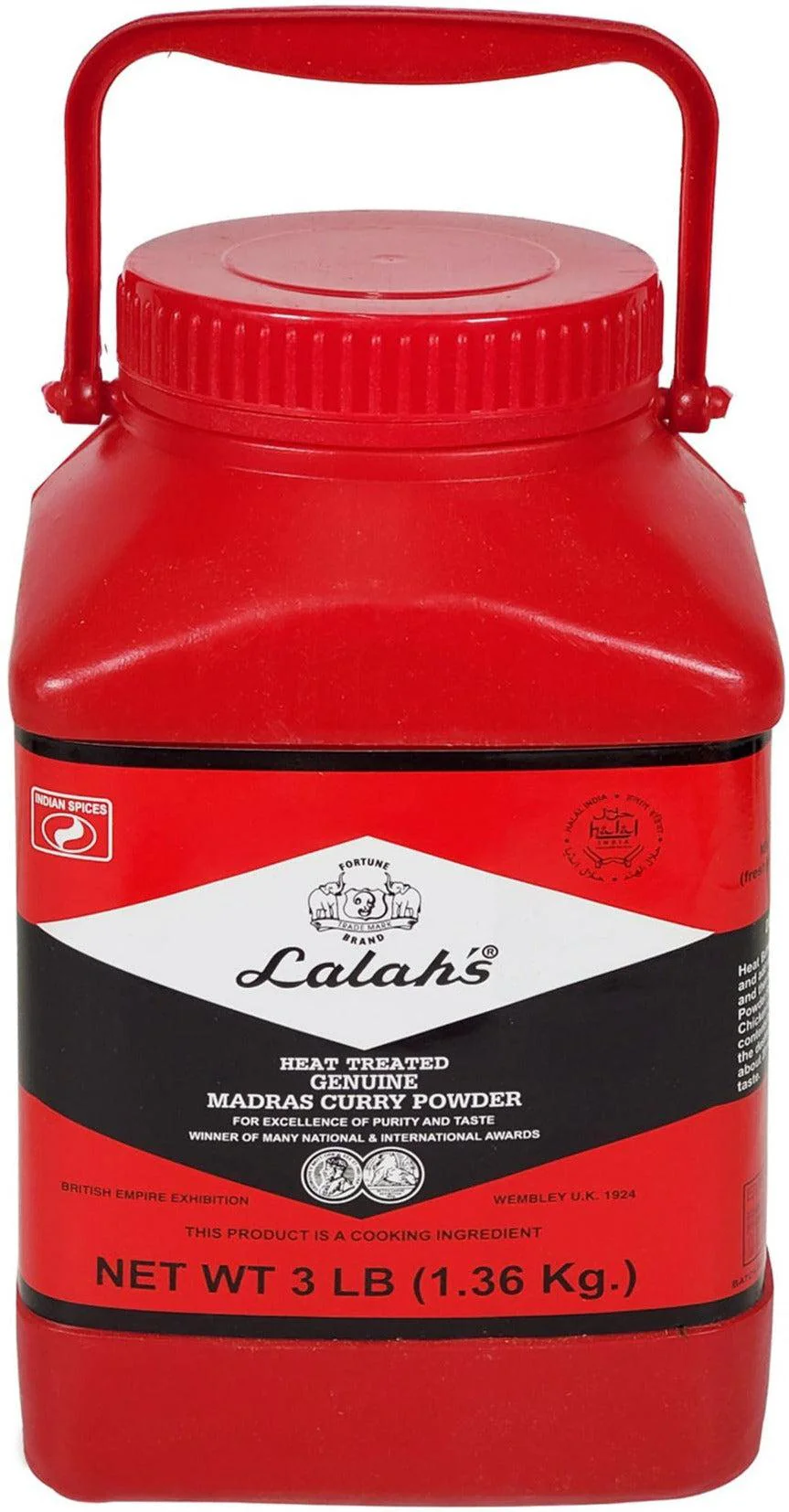
Lalah's Madras Curry Powder 3lb Red Container | Delivering Across Canada
Lalahs Madras curry powder is a pre-blended spice mixture available in 3 lb containers or cases containing 18 lbs (6 x 3 lb containers) for commercial foodservice operations. This South Indian-style curry powder blend is formulated for use in professional kitchens requiring consistent flavor profiles across multiple preparations. Available for delivery across Canada.
Common Commercial Applications
Restaurants, catering operations, food manufacturers, and institutional kitchens use Madras curry powder for seasoning and flavor development across diverse menu items. The pre-blended format provides convenience for operations requiring consistent spice profiles without in-house spice blending.
Typical users include:
- Indian and South Asian restaurants preparing traditional curry dishes
- Multi-cuisine restaurants featuring curry-based menu items
- Catering companies handling diverse cuisine requirements for events
- Food trucks and mobile vendors with limited prep space and ingredient storage
- Hotel banquet kitchens and institutional foodservice operations
- Cafes and fast-casual concepts with globally-inspired menus
- Specialty food manufacturers producing curry sauces, marinades, and prepared meals
- Retail food operations offering curry-spiced items
- Corporate cafeterias and educational institution kitchens
- Meal prep services and ghost kitchens with varied cuisine offerings
Spice Blend Composition and Characteristics
Madras curry powder is a composite spice blend associated with South Indian culinary traditions. While specific formulations vary by manufacturer, commercial Madras curry powders typically contain combinations of ground spices selected for heat, color, and aromatic complexity.
Common spice components may include:
- Coriander seeds
- Cumin seeds
- Turmeric (provides yellow-orange color)
- Fenugreek
- Mustard seeds
- Black pepper
- Dried chilies (contributes heat)
- Curry leaves
- Garlic powder
- Ginger powder
Sensory profile characteristics:
- Heat level: Typically moderate to moderately-hot compared to standard curry powder
- Aroma: Complex, warm, and earthy with notable spice intensity
- Flavor: Savory with heat, slight bitterness, and aromatic depth
- Color: Deep yellow-orange to reddish-brown from turmeric and chili content
- Texture: Fine to medium powder consistency
The 3 lb container size provides bulk quantity for commercial operations while maintaining manageable handling and storage.
Culinary Uses in Commercial Kitchens
Madras curry powder serves multiple functions in professional food preparation:
Traditional curry preparations:
- Meat curries (chicken, lamb, beef, goat)
- Seafood and fish curry dishes
- Vegetable curry preparations
- Lentil and legume-based curries
- Egg curry dishes
Marinades and rubs:
- Protein seasoning for grilling or roasting
- Tandoori-style preparations
- Pre-marination for curry dishes
- Dry rub component for meats and vegetables
Sauce and gravy formulations:
- Curry sauce bases for various dishes
- Butter chicken and tikka masala variations
- Soup and stew seasoning
- Creamy curry sauce preparations
Contemporary and fusion applications:
- Curry-spiced roasted vegetables
- Rice and grain dish seasoning
- Curry aioli and flavored mayonnaise
- Snack food seasoning (nuts, chips, popcorn)
- Curry-spiced soups and bisques
- Pizza and flatbread toppings
- Salad dressing components
Usage timing:
- Added during cooking to build flavor layers
- Bloomed in oil or ghee to release aromatic compounds
- Incorporated into dry spice rubs
- Mixed into wet marinades and batters
Packaging Options and Storage
3 lb container: Suitable for moderate to high-volume operations, providing bulk quantity while allowing for inventory rotation and freshness management.
Case of 18 lbs (6 x 3 lb): Designed for high-volume users, multi-unit operations, or businesses with consistent curry powder usage across extensive menu offerings. Case purchasing typically provides cost efficiency.
Proper storage protocols maintain spice blend quality:
- Store in airtight containers in cool, dry locations away from direct sunlight
- Avoid exposure to heat sources and moisture
- Keep away from strong light that can degrade color and aromatic compounds
- Prevent humidity contact to avoid clumping
- Implement first-in, first-out rotation practices
- Climate-controlled storage preserves volatile oils and flavor compounds
- Reseal containers tightly after each use
- Store away from strong-smelling items as spices can absorb odors
Operational Considerations for Commercial Buyers
Businesses using Madras curry powder in commercial quantities should account for several practical factors:
Blend consistency: Pre-mixed curry powder provides standardized flavor profiles across preparation batches, ensuring menu consistency
Recipe standardization: Use weight-based measurements rather than volume for uniform results across different staff members and production runs
Heat level awareness: Madras curry powder typically contains more heat than mild curry powders. Test with your specific product before full-scale menu integration.
Color impact: Turmeric and chili content affects dish appearance. Consider visual presentation in final plating.
Aromatic compound preservation: Ground spice blends lose potency over time. Monitor freshness through regular sensory evaluation.
Staff training: Ensure kitchen teams understand proper storage, measurement, and blooming techniques for curry powder
Yield calculations: Track usage rates to determine cost per dish and establish reorder points
Cross-contamination protocols: Implement handling procedures for customers with specific spice sensitivities
Madras Curry Powder vs. Other Curry Blends
Understanding distinctions between curry powder types helps in product selection:
Madras curry powder characteristics:
- Higher heat level from increased chili content
- More robust, spicier flavor profile
- Deeper color from turmeric and chili
- Associated with South Indian cuisine
Standard curry powder characteristics:
- Milder heat level
- Balanced, less intense spice profile
- Lighter yellow color
- More versatile for heat-sensitive customers
Garam masala characteristics:
- Warming spice blend without turmeric
- No yellow coloring
- Used as finishing spice rather than base seasoning
- Different aromatic profile
Some operations stock multiple curry powder varieties to accommodate different recipe requirements, heat preferences, and regional authenticity standards.
Quality Indicators for Commercial Grade Curry Powder
When evaluating Madras curry powder for commercial purchase, buyers typically assess:
- Aroma intensity: Fresh, complex smell indicates recent production and proper storage
- Color vibrancy: Rich yellow-orange to reddish color suggests quality turmeric and chili content
- Texture consistency: Fine, uniform powder without excessive clumping
- Moisture content: Properly dried powder should be free-flowing
- Foreign material absence: Clean product without stems, husks, or debris
- Packaging integrity: Sealed, undamaged containers prevent moisture exposure and contamination
Requesting samples before committing to bulk purchases allows verification that the blend meets operational standards and recipe requirements.
Container Size Considerations
The 3 lb format offers specific advantages for commercial operations:
Benefits of 3 lb containers:
- Bulk quantity reduces per-pound cost compared to retail sizes
- Manageable size for kitchen storage and handling
- Allows for freshness maintenance through reasonable turnover
- Suitable for operations with regular but not extreme usage
- Multiple containers per case provide backup inventory
Case purchasing advantages:
- Volume discounts through bulk buying
- Reduces reorder frequency
- Ensures consistent supply during high-demand periods
- Suitable for high-volume operations or multi-location businesses
Frequently Asked Questions
1. What makes Madras curry powder different from regular curry powder?
Madras curry powder typically contains higher proportions of chili peppers, resulting in more heat and a deeper, spicier flavor profile compared to standard curry powder. The exact heat level varies by manufacturer formulation.
2. How much Madras curry powder should I use in recipes?
Usage depends on desired heat intensity and specific blend strength. Traditional curry dishes often call for 1-3 tablespoons per batch serving 4-6 people. Start with recipe guidelines and adjust through testing based on your specific product and customer preferences.
3. Can I substitute Madras curry powder for regular curry powder?
Substitution is possible but will increase heat level and alter flavor profile. Reduce quantity when substituting Madras for standard curry powder, and adjust based on taste testing. Recipe adjustment may be necessary.
4. Should curry powder be cooked or added at the end?
Madras curry powder benefits from cooking. Blooming in oil or ghee at the beginning of preparation releases aromatic compounds and develops flavor. Avoid adding raw curry powder at the end of cooking, as this can result in harsh, uncooked spice taste.
5. Does Madras curry powder lose potency over time?
Yes, all ground spice blends lose aromatic compounds and flavor intensity over time, particularly after opening. Proper airtight storage slows degradation. Regular sensory checks help determine when replacement is needed for quality standards.
6. Is Madras curry powder gluten-free?
Pure spice blends typically contain no gluten. However, verify with the manufacturer regarding processing facilities and potential cross-contamination if allergen concerns exist for your operation.
7. How should I store opened containers of curry powder?
Transfer to airtight containers if original packaging doesn't reseal effectively. Store in cool, dry conditions away from light, heat, and moisture. Some high-volume operations use dedicated spice storage systems with humidity control.
8. Can Madras curry powder be used in non-Indian dishes?
Yes, many contemporary kitchens use Madras curry powder in fusion applications, marinades, and globally-inspired dishes beyond traditional South Asian cuisine. The spice blend's complexity works across diverse culinary applications.
9. What is the shelf life of curry powder in commercial settings?
Shelf life varies with storage conditions. Properly stored curry powder can maintain usable quality for extended periods, though aromatic intensity gradually diminishes. Monitor through regular quality assessments rather than relying solely on dates.
10. How many servings can I get from 3 lbs of curry powder?
Yield depends on recipe portions and usage rates. If using 1-2 tablespoons per serving, 3 lbs provides hundreds of servings. Calculate based on specific recipe requirements for accurate cost analysis.
Businesses purchasing Lalahs Madras curry powder in 3 lb containers or cases should evaluate typical usage volume, storage capacity, heat tolerance of customer base, and menu applications. The bulk format works for operations with regular curry-based offerings, from small ethnic restaurants to large institutional kitchens. Establishing storage protocols, standardized recipes accounting for heat levels, and staff training on proper spice handling helps maintain product quality and operational efficiency across Canadian foodservice operations.
Description
Lalah's Madras Curry Powder 3lb Red Container | Delivering Across Canada
Lalahs Madras curry powder is a pre-blended spice mixture available in 3 lb containers or cases containing 18 lbs (6 x 3 lb containers) for commercial foodservice operations. This South Indian-style curry powder blend is formulated for use in professional kitchens requiring consistent flavor profiles across multiple preparations. Available for delivery across Canada.
Common Commercial Applications
Restaurants, catering operations, food manufacturers, and institutional kitchens use Madras curry powder for seasoning and flavor development across diverse menu items. The pre-blended format provides convenience for operations requiring consistent spice profiles without in-house spice blending.
Typical users include:
- Indian and South Asian restaurants preparing traditional curry dishes
- Multi-cuisine restaurants featuring curry-based menu items
- Catering companies handling diverse cuisine requirements for events
- Food trucks and mobile vendors with limited prep space and ingredient storage
- Hotel banquet kitchens and institutional foodservice operations
- Cafes and fast-casual concepts with globally-inspired menus
- Specialty food manufacturers producing curry sauces, marinades, and prepared meals
- Retail food operations offering curry-spiced items
- Corporate cafeterias and educational institution kitchens
- Meal prep services and ghost kitchens with varied cuisine offerings
Spice Blend Composition and Characteristics
Madras curry powder is a composite spice blend associated with South Indian culinary traditions. While specific formulations vary by manufacturer, commercial Madras curry powders typically contain combinations of ground spices selected for heat, color, and aromatic complexity.
Common spice components may include:
- Coriander seeds
- Cumin seeds
- Turmeric (provides yellow-orange color)
- Fenugreek
- Mustard seeds
- Black pepper
- Dried chilies (contributes heat)
- Curry leaves
- Garlic powder
- Ginger powder
Sensory profile characteristics:
- Heat level: Typically moderate to moderately-hot compared to standard curry powder
- Aroma: Complex, warm, and earthy with notable spice intensity
- Flavor: Savory with heat, slight bitterness, and aromatic depth
- Color: Deep yellow-orange to reddish-brown from turmeric and chili content
- Texture: Fine to medium powder consistency
The 3 lb container size provides bulk quantity for commercial operations while maintaining manageable handling and storage.
Culinary Uses in Commercial Kitchens
Madras curry powder serves multiple functions in professional food preparation:
Traditional curry preparations:
- Meat curries (chicken, lamb, beef, goat)
- Seafood and fish curry dishes
- Vegetable curry preparations
- Lentil and legume-based curries
- Egg curry dishes
Marinades and rubs:
- Protein seasoning for grilling or roasting
- Tandoori-style preparations
- Pre-marination for curry dishes
- Dry rub component for meats and vegetables
Sauce and gravy formulations:
- Curry sauce bases for various dishes
- Butter chicken and tikka masala variations
- Soup and stew seasoning
- Creamy curry sauce preparations
Contemporary and fusion applications:
- Curry-spiced roasted vegetables
- Rice and grain dish seasoning
- Curry aioli and flavored mayonnaise
- Snack food seasoning (nuts, chips, popcorn)
- Curry-spiced soups and bisques
- Pizza and flatbread toppings
- Salad dressing components
Usage timing:
- Added during cooking to build flavor layers
- Bloomed in oil or ghee to release aromatic compounds
- Incorporated into dry spice rubs
- Mixed into wet marinades and batters
Packaging Options and Storage
3 lb container: Suitable for moderate to high-volume operations, providing bulk quantity while allowing for inventory rotation and freshness management.
Case of 18 lbs (6 x 3 lb): Designed for high-volume users, multi-unit operations, or businesses with consistent curry powder usage across extensive menu offerings. Case purchasing typically provides cost efficiency.
Proper storage protocols maintain spice blend quality:
- Store in airtight containers in cool, dry locations away from direct sunlight
- Avoid exposure to heat sources and moisture
- Keep away from strong light that can degrade color and aromatic compounds
- Prevent humidity contact to avoid clumping
- Implement first-in, first-out rotation practices
- Climate-controlled storage preserves volatile oils and flavor compounds
- Reseal containers tightly after each use
- Store away from strong-smelling items as spices can absorb odors
Operational Considerations for Commercial Buyers
Businesses using Madras curry powder in commercial quantities should account for several practical factors:
Blend consistency: Pre-mixed curry powder provides standardized flavor profiles across preparation batches, ensuring menu consistency
Recipe standardization: Use weight-based measurements rather than volume for uniform results across different staff members and production runs
Heat level awareness: Madras curry powder typically contains more heat than mild curry powders. Test with your specific product before full-scale menu integration.
Color impact: Turmeric and chili content affects dish appearance. Consider visual presentation in final plating.
Aromatic compound preservation: Ground spice blends lose potency over time. Monitor freshness through regular sensory evaluation.
Staff training: Ensure kitchen teams understand proper storage, measurement, and blooming techniques for curry powder
Yield calculations: Track usage rates to determine cost per dish and establish reorder points
Cross-contamination protocols: Implement handling procedures for customers with specific spice sensitivities
Madras Curry Powder vs. Other Curry Blends
Understanding distinctions between curry powder types helps in product selection:
Madras curry powder characteristics:
- Higher heat level from increased chili content
- More robust, spicier flavor profile
- Deeper color from turmeric and chili
- Associated with South Indian cuisine
Standard curry powder characteristics:
- Milder heat level
- Balanced, less intense spice profile
- Lighter yellow color
- More versatile for heat-sensitive customers
Garam masala characteristics:
- Warming spice blend without turmeric
- No yellow coloring
- Used as finishing spice rather than base seasoning
- Different aromatic profile
Some operations stock multiple curry powder varieties to accommodate different recipe requirements, heat preferences, and regional authenticity standards.
Quality Indicators for Commercial Grade Curry Powder
When evaluating Madras curry powder for commercial purchase, buyers typically assess:
- Aroma intensity: Fresh, complex smell indicates recent production and proper storage
- Color vibrancy: Rich yellow-orange to reddish color suggests quality turmeric and chili content
- Texture consistency: Fine, uniform powder without excessive clumping
- Moisture content: Properly dried powder should be free-flowing
- Foreign material absence: Clean product without stems, husks, or debris
- Packaging integrity: Sealed, undamaged containers prevent moisture exposure and contamination
Requesting samples before committing to bulk purchases allows verification that the blend meets operational standards and recipe requirements.
Container Size Considerations
The 3 lb format offers specific advantages for commercial operations:
Benefits of 3 lb containers:
- Bulk quantity reduces per-pound cost compared to retail sizes
- Manageable size for kitchen storage and handling
- Allows for freshness maintenance through reasonable turnover
- Suitable for operations with regular but not extreme usage
- Multiple containers per case provide backup inventory
Case purchasing advantages:
- Volume discounts through bulk buying
- Reduces reorder frequency
- Ensures consistent supply during high-demand periods
- Suitable for high-volume operations or multi-location businesses
Frequently Asked Questions
1. What makes Madras curry powder different from regular curry powder?
Madras curry powder typically contains higher proportions of chili peppers, resulting in more heat and a deeper, spicier flavor profile compared to standard curry powder. The exact heat level varies by manufacturer formulation.
2. How much Madras curry powder should I use in recipes?
Usage depends on desired heat intensity and specific blend strength. Traditional curry dishes often call for 1-3 tablespoons per batch serving 4-6 people. Start with recipe guidelines and adjust through testing based on your specific product and customer preferences.
3. Can I substitute Madras curry powder for regular curry powder?
Substitution is possible but will increase heat level and alter flavor profile. Reduce quantity when substituting Madras for standard curry powder, and adjust based on taste testing. Recipe adjustment may be necessary.
4. Should curry powder be cooked or added at the end?
Madras curry powder benefits from cooking. Blooming in oil or ghee at the beginning of preparation releases aromatic compounds and develops flavor. Avoid adding raw curry powder at the end of cooking, as this can result in harsh, uncooked spice taste.
5. Does Madras curry powder lose potency over time?
Yes, all ground spice blends lose aromatic compounds and flavor intensity over time, particularly after opening. Proper airtight storage slows degradation. Regular sensory checks help determine when replacement is needed for quality standards.
6. Is Madras curry powder gluten-free?
Pure spice blends typically contain no gluten. However, verify with the manufacturer regarding processing facilities and potential cross-contamination if allergen concerns exist for your operation.
7. How should I store opened containers of curry powder?
Transfer to airtight containers if original packaging doesn't reseal effectively. Store in cool, dry conditions away from light, heat, and moisture. Some high-volume operations use dedicated spice storage systems with humidity control.
8. Can Madras curry powder be used in non-Indian dishes?
Yes, many contemporary kitchens use Madras curry powder in fusion applications, marinades, and globally-inspired dishes beyond traditional South Asian cuisine. The spice blend's complexity works across diverse culinary applications.
9. What is the shelf life of curry powder in commercial settings?
Shelf life varies with storage conditions. Properly stored curry powder can maintain usable quality for extended periods, though aromatic intensity gradually diminishes. Monitor through regular quality assessments rather than relying solely on dates.
10. How many servings can I get from 3 lbs of curry powder?
Yield depends on recipe portions and usage rates. If using 1-2 tablespoons per serving, 3 lbs provides hundreds of servings. Calculate based on specific recipe requirements for accurate cost analysis.
Businesses purchasing Lalahs Madras curry powder in 3 lb containers or cases should evaluate typical usage volume, storage capacity, heat tolerance of customer base, and menu applications. The bulk format works for operations with regular curry-based offerings, from small ethnic restaurants to large institutional kitchens. Establishing storage protocols, standardized recipes accounting for heat levels, and staff training on proper spice handling helps maintain product quality and operational efficiency across Canadian foodservice operations.