Original: $9.76
-65%$9.76
$3.42The Story
Marco Polo Frozen Seafood Mixture 2lb | Low Price | Delivery Across GTA
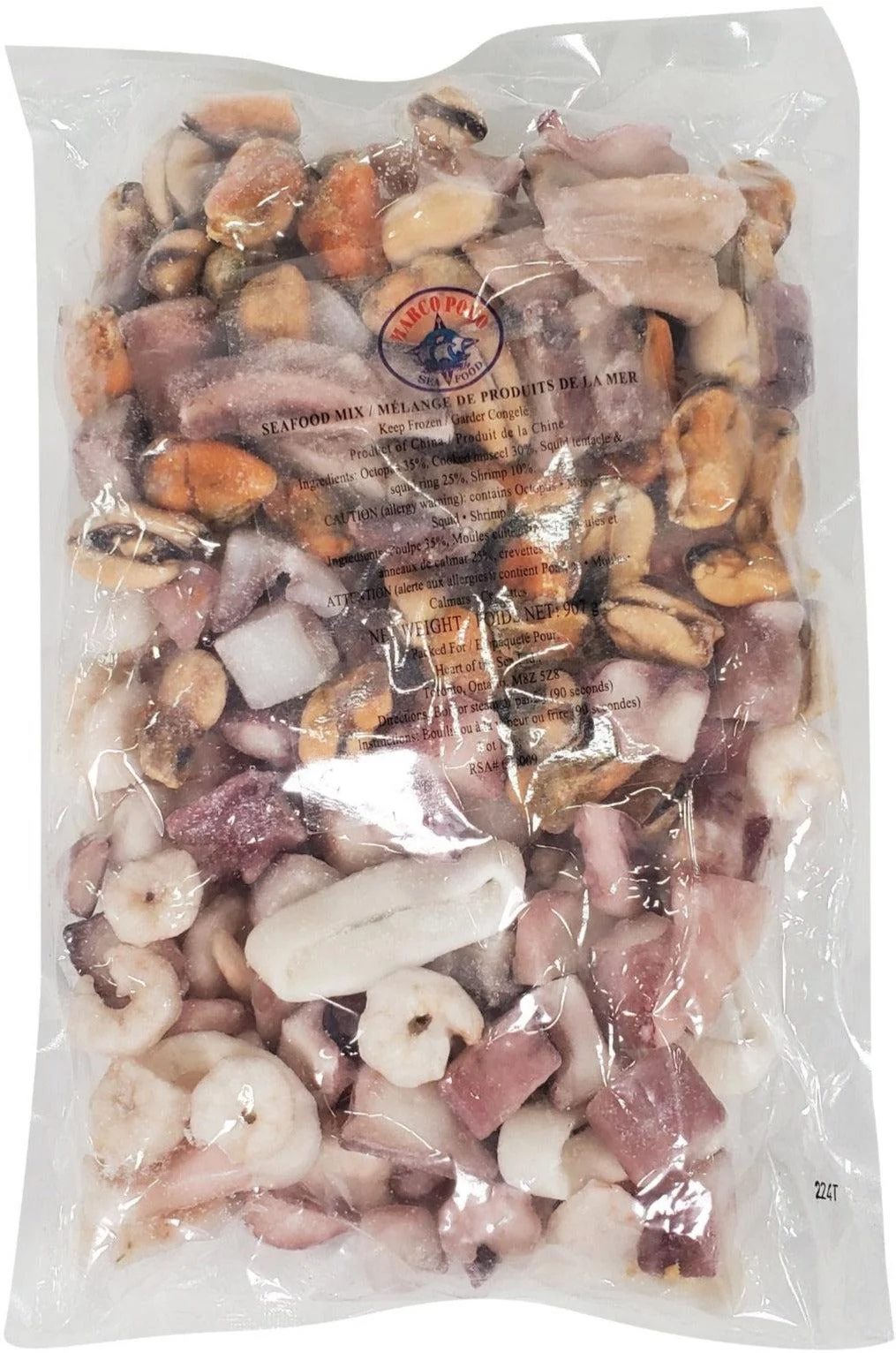
Marco Polo Seafood Mix is a frozen mixed seafood product containing four different seafood varieties in a 2 lb package format. Cases contain 10 individual 2 lb packages (20 lbs total). This product combines octopus, cooked mussels, squid (tentacles and rings), and shrimp in pre-portioned ratios. Available for delivery across the Greater Toronto Area.
Product Composition
The Marco Polo Seafood Mix contains a predetermined blend of seafood:
- 35% Octopus - Pre-cleaned octopus pieces
- 30% Cooked Mussels - Fully cooked mussel meat
- 25% Squid (Tentacles & Rings) - Combination of tentacle portions and sliced rings
- 10% Shrimp - Shell-off shrimp
All components are frozen together in each package, providing a consistent mix ratio across units.
Common Commercial Applications
Foodservice operations, catering companies, and retail establishments use mixed seafood products for menu items requiring multiple seafood types in a single dish.
Typical users include:
- Italian restaurants preparing seafood pasta dishes and risottos
- Seafood restaurants offering mixed seafood platters
- Catering companies handling event service with seafood courses
- Hotels and hospitality venues with diverse menu offerings
- Quick-service restaurants featuring seafood options
- Food trucks specializing in seafood or Mediterranean cuisine
- Cafes with hot seafood sandwich or soup offerings
- Institutional kitchens in healthcare or corporate dining
- Retail food operations with prepared food sections
- Pizzerias offering seafood pizza varieties
Culinary Uses
Mixed seafood products serve various menu applications:
Hot preparations:
- Seafood pasta dishes (marinara, fra diavolo, scampi-style)
- Paella and seafood rice dishes
- Seafood stews and cioppino
- Stir-fries and Asian-inspired preparations
- Pizza toppings
- Seafood soups and chowders
Cold preparations:
- Seafood salads
- Antipasto and appetizer platters
- Ceviche-style dishes (using appropriate food safety protocols)
- Mediterranean-style seafood preparations
Preparation Considerations
Frozen mixed seafood requires proper thawing and cooking:
Thawing methods:
- Refrigerator thawing (overnight, safest method)
- Cold water thawing (sealed package submerged in cold water)
- Direct cooking from frozen (adjust cooking times accordingly)
Cooking guidelines:
- Mussels are pre-cooked; other components require cooking
- Different seafood types have varying optimal cooking times
- Overcooking can result in tough, rubbery texture, particularly for octopus and squid
- Internal temperature monitoring recommended for food safety
- Sequential cooking (adding components at different times) may achieve better texture results
Handling notes:
- Keep frozen until ready to use
- Do not refreeze after thawing
- Use within recommended timeframe after thawing
- Follow local food safety guidelines for seafood preparation
Storage and Handling
Proper storage maintains product quality and safety:
- Freezer storage: Maintain at 0°F (-18°C) or below
- Shelf life: Check package for best-before date
- After thawing: Use within 24-48 hours when refrigerated
- Package integrity: Inspect for ice crystals or freezer burn before use
- Cross-contamination: Store separately from ready-to-eat foods
- First-in, first-out: Rotate inventory based on receipt dates
Packaging Specifications
Individual package:
- 2 lb (approximately 907 g) per sealed package
- Frozen block or individually quick frozen (IQF) pieces depending on processing method
- Sealed plastic packaging for freezer storage
Case:
- 10 packages per case
- 20 lbs total case weight
- Corrugated case packaging for shipping and storage
The 2 lb package size accommodates portion planning for various service volumes, while case purchasing provides cost efficiency for operations with regular seafood menu items.
Operational Considerations
Businesses using mixed seafood products should account for several factors:
Menu planning:
- Pre-mixed ratios determine final dish composition
- Limited flexibility in adjusting individual seafood proportions
- Consider whether preset mix matches recipe requirements
Cost analysis:
- Compare mixed product pricing against individual seafood purchases
- Calculate cost per serving based on portion sizes
- Factor in labour savings from pre-cleaned, pre-portioned format
Inventory management:
- Freezer space requirements for case storage
- Thawing time considerations for advance preparation
- Shelf life monitoring and rotation protocols
Food safety:
- Staff training on proper thawing and cooking procedures
- Temperature monitoring during storage and preparation
- Allergen management (shellfish allergens present)
Frequently Asked Questions
1. Are all components in this mix fully cooked?
No. The mussels are fully cooked, but the octopus, squid, and shrimp require cooking before consumption. Follow proper cooking procedures for raw seafood components.
2. Can I cook this product directly from frozen?
Yes, though thawing first allows for more even cooking and better texture control. If cooking from frozen, increase cooking time and monitor internal temperatures carefully.
3. How long can I store thawed seafood before cooking?
Once thawed, use within 24-48 hours. Keep refrigerated at 40°F (4°C) or below. Do not refreeze after thawing.
4. Is this product suitable for customers with shellfish allergies?
No. This product contains multiple types of shellfish (mussels, shrimp) and cephalopods (octopus, squid). It is not suitable for individuals with shellfish or seafood allergies.
5. Can I separate the different seafood types?
Depending on whether the product is block-frozen or IQF, separation may be difficult. Block-frozen products typically require thawing before components can be separated. IQF products may offer easier separation while frozen.
6. What's the typical cooking time for this mix?
Cooking time varies by preparation method. Sautéing typically takes 5-8 minutes over medium-high heat. Simmering in sauce may take 10-15 minutes. Adjust timing based on specific cooking method and starting temperature (frozen vs. thawed).
7. How many servings does a 2 lb package provide?
Serving count depends on portion size and dish type. For a pasta dish with 4-6 oz seafood per serving, a 2 lb package yields approximately 5-8 servings.
8. Is the octopus tender or does it require special preparation?
Octopus texture depends on cooking method and duration. Gentle simmering or braising typically produces tender results. High heat or overcooking can result in tough texture.
9. Can this product be used for sushi or raw preparations?
This product is not sold as sushi-grade. All raw components should be cooked before consumption. Follow local health regulations regarding seafood preparation.
10. What's the difference between mixed seafood and individual seafood purchases?
Mixed seafood provides convenience and pre-set ratios in a single package. Individual purchases offer more control over proportions and selection but require more sourcing and inventory management.
Businesses purchasing Marco Polo Seafood Mix should evaluate their typical seafood dish preparation volume, available freezer storage capacity, and menu requirements for mixed seafood ratios. The 2 lb package format suits operations with moderate seafood usage, while the 10-package case provides cost efficiency for establishments with regular seafood menu offerings. Understanding thawing requirements, cooking characteristics of different seafood types, and proper storage protocols helps maintain product quality and food safety across Greater Toronto Area foodservice operations.
Description
Marco Polo Frozen Seafood Mixture 2lb | Low Price | Delivery Across GTA
Marco Polo Seafood Mix is a frozen mixed seafood product containing four different seafood varieties in a 2 lb package format. Cases contain 10 individual 2 lb packages (20 lbs total). This product combines octopus, cooked mussels, squid (tentacles and rings), and shrimp in pre-portioned ratios. Available for delivery across the Greater Toronto Area.
Product Composition
The Marco Polo Seafood Mix contains a predetermined blend of seafood:
- 35% Octopus - Pre-cleaned octopus pieces
- 30% Cooked Mussels - Fully cooked mussel meat
- 25% Squid (Tentacles & Rings) - Combination of tentacle portions and sliced rings
- 10% Shrimp - Shell-off shrimp
All components are frozen together in each package, providing a consistent mix ratio across units.
Common Commercial Applications
Foodservice operations, catering companies, and retail establishments use mixed seafood products for menu items requiring multiple seafood types in a single dish.
Typical users include:
- Italian restaurants preparing seafood pasta dishes and risottos
- Seafood restaurants offering mixed seafood platters
- Catering companies handling event service with seafood courses
- Hotels and hospitality venues with diverse menu offerings
- Quick-service restaurants featuring seafood options
- Food trucks specializing in seafood or Mediterranean cuisine
- Cafes with hot seafood sandwich or soup offerings
- Institutional kitchens in healthcare or corporate dining
- Retail food operations with prepared food sections
- Pizzerias offering seafood pizza varieties
Culinary Uses
Mixed seafood products serve various menu applications:
Hot preparations:
- Seafood pasta dishes (marinara, fra diavolo, scampi-style)
- Paella and seafood rice dishes
- Seafood stews and cioppino
- Stir-fries and Asian-inspired preparations
- Pizza toppings
- Seafood soups and chowders
Cold preparations:
- Seafood salads
- Antipasto and appetizer platters
- Ceviche-style dishes (using appropriate food safety protocols)
- Mediterranean-style seafood preparations
Preparation Considerations
Frozen mixed seafood requires proper thawing and cooking:
Thawing methods:
- Refrigerator thawing (overnight, safest method)
- Cold water thawing (sealed package submerged in cold water)
- Direct cooking from frozen (adjust cooking times accordingly)
Cooking guidelines:
- Mussels are pre-cooked; other components require cooking
- Different seafood types have varying optimal cooking times
- Overcooking can result in tough, rubbery texture, particularly for octopus and squid
- Internal temperature monitoring recommended for food safety
- Sequential cooking (adding components at different times) may achieve better texture results
Handling notes:
- Keep frozen until ready to use
- Do not refreeze after thawing
- Use within recommended timeframe after thawing
- Follow local food safety guidelines for seafood preparation
Storage and Handling
Proper storage maintains product quality and safety:
- Freezer storage: Maintain at 0°F (-18°C) or below
- Shelf life: Check package for best-before date
- After thawing: Use within 24-48 hours when refrigerated
- Package integrity: Inspect for ice crystals or freezer burn before use
- Cross-contamination: Store separately from ready-to-eat foods
- First-in, first-out: Rotate inventory based on receipt dates
Packaging Specifications
Individual package:
- 2 lb (approximately 907 g) per sealed package
- Frozen block or individually quick frozen (IQF) pieces depending on processing method
- Sealed plastic packaging for freezer storage
Case:
- 10 packages per case
- 20 lbs total case weight
- Corrugated case packaging for shipping and storage
The 2 lb package size accommodates portion planning for various service volumes, while case purchasing provides cost efficiency for operations with regular seafood menu items.
Operational Considerations
Businesses using mixed seafood products should account for several factors:
Menu planning:
- Pre-mixed ratios determine final dish composition
- Limited flexibility in adjusting individual seafood proportions
- Consider whether preset mix matches recipe requirements
Cost analysis:
- Compare mixed product pricing against individual seafood purchases
- Calculate cost per serving based on portion sizes
- Factor in labour savings from pre-cleaned, pre-portioned format
Inventory management:
- Freezer space requirements for case storage
- Thawing time considerations for advance preparation
- Shelf life monitoring and rotation protocols
Food safety:
- Staff training on proper thawing and cooking procedures
- Temperature monitoring during storage and preparation
- Allergen management (shellfish allergens present)
Frequently Asked Questions
1. Are all components in this mix fully cooked?
No. The mussels are fully cooked, but the octopus, squid, and shrimp require cooking before consumption. Follow proper cooking procedures for raw seafood components.
2. Can I cook this product directly from frozen?
Yes, though thawing first allows for more even cooking and better texture control. If cooking from frozen, increase cooking time and monitor internal temperatures carefully.
3. How long can I store thawed seafood before cooking?
Once thawed, use within 24-48 hours. Keep refrigerated at 40°F (4°C) or below. Do not refreeze after thawing.
4. Is this product suitable for customers with shellfish allergies?
No. This product contains multiple types of shellfish (mussels, shrimp) and cephalopods (octopus, squid). It is not suitable for individuals with shellfish or seafood allergies.
5. Can I separate the different seafood types?
Depending on whether the product is block-frozen or IQF, separation may be difficult. Block-frozen products typically require thawing before components can be separated. IQF products may offer easier separation while frozen.
6. What's the typical cooking time for this mix?
Cooking time varies by preparation method. Sautéing typically takes 5-8 minutes over medium-high heat. Simmering in sauce may take 10-15 minutes. Adjust timing based on specific cooking method and starting temperature (frozen vs. thawed).
7. How many servings does a 2 lb package provide?
Serving count depends on portion size and dish type. For a pasta dish with 4-6 oz seafood per serving, a 2 lb package yields approximately 5-8 servings.
8. Is the octopus tender or does it require special preparation?
Octopus texture depends on cooking method and duration. Gentle simmering or braising typically produces tender results. High heat or overcooking can result in tough texture.
9. Can this product be used for sushi or raw preparations?
This product is not sold as sushi-grade. All raw components should be cooked before consumption. Follow local health regulations regarding seafood preparation.
10. What's the difference between mixed seafood and individual seafood purchases?
Mixed seafood provides convenience and pre-set ratios in a single package. Individual purchases offer more control over proportions and selection but require more sourcing and inventory management.
Businesses purchasing Marco Polo Seafood Mix should evaluate their typical seafood dish preparation volume, available freezer storage capacity, and menu requirements for mixed seafood ratios. The 2 lb package format suits operations with moderate seafood usage, while the 10-package case provides cost efficiency for establishments with regular seafood menu offerings. Understanding thawing requirements, cooking characteristics of different seafood types, and proper storage protocols helps maintain product quality and food safety across Greater Toronto Area foodservice operations.