The Story
Fresh New Zealand Lamb – Boneless Leg – Halal | 4 kg Pack
Product Overview
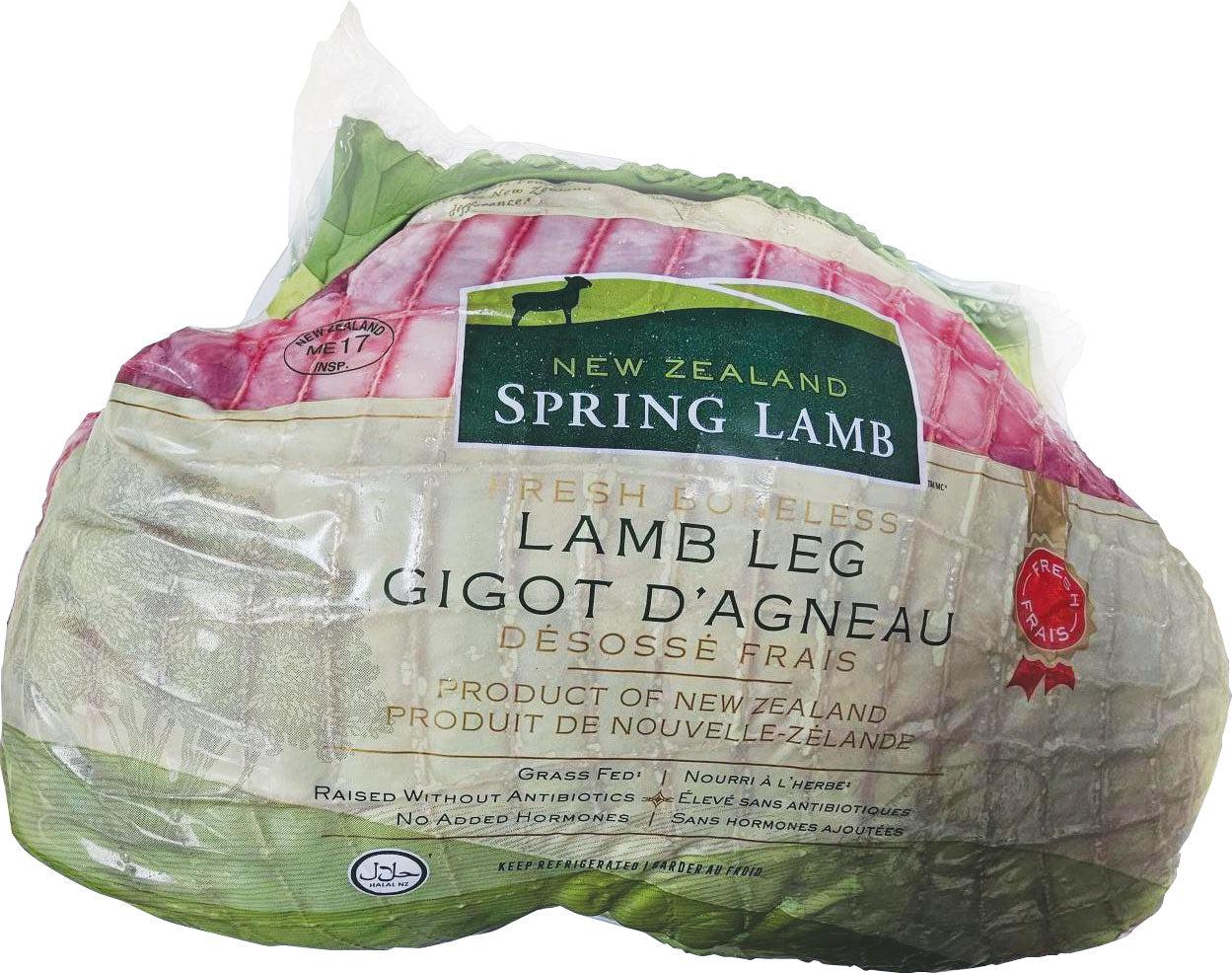
Fresh New Zealand Lamb – Boneless Leg – Halal is a whole boneless leg of lamb sourced from New Zealand, supplied in approximately 4 kg packs. This cut is widely used in professional foodservice environments where a versatile, bone-free lamb portion is required for roasting, braising, slicing, or portion-controlled plating.
New Zealand lamb is recognised in the global meat trade for the country's pasture-based farming practices, where animals are typically raised on open grassland. The halal designation indicates the product has been processed in accordance with halal slaughter requirements, making it suitable for foodservice operators, retailers, and caterers serving Muslim consumers or managing halal-certified menus.
About New Zealand Lamb
New Zealand is one of the world's leading exporters of lamb, and its product is widely distributed across international foodservice and retail markets. New Zealand spring lamb is known within the trade for its relatively mild flavour profile and lean-to-fat ratio, characteristics that are generally attributed to pasture-fed rearing conditions and the country's temperate climate.
The boneless leg format is one of the most commonly requested lamb cuts in commercial kitchens due to its practicality — eliminating bone-in weight from costing calculations, reducing prep time, and allowing for more uniform portioning across service covers.
Halal Certification
The halal designation on this product indicates it has been slaughtered and processed following Islamic dietary law requirements. For foodservice operators running halal-certified kitchens, catering companies serving Muslim clients, or retailers stocking halal meat sections, this specification is an important procurement consideration.
Buyers operating under formal halal certification programs should verify the specific certification body and documentation associated with this product at the time of order to confirm alignment with their own certification requirements.
Common Commercial Applications
Fresh New Zealand boneless lamb leg is used across a broad range of professional kitchen and retail environments, including:
- Restaurants and fine dining establishments roasting whole boneless legs as a centrepiece dish or slicing for plated service
- Middle Eastern and South Asian restaurants preparing traditional lamb preparations such as roast lamb, slow-cooked lamb, or marinated leg dishes
- Catering companies using boneless leg format for large-batch event catering where uniform portioning and carving efficiency are priorities
- Hotels and hospitality kitchens incorporating lamb leg into banquet menus, buffet service, or à la carte programs
- Specialty butcher shops and halal meat retailers offering portioned or whole boneless leg to retail customers
- Food trucks and carts specialising in lamb-based street food such as wraps, rotisserie-style lamb, or slow-roasted preparations
- Institutional kitchens managing diverse dietary requirements across hospital, university, or corporate food programs
Product Characteristics
| Feature | Detail |
|---|---|
| Product Type | Boneless whole leg of lamb |
| Origin | New Zealand |
| Halal Status | Halal |
| Pack Size | Approximately 4 kg |
| Form | Fresh (not frozen) |
| Rearing Method | Pasture-raised |
| Cut Type | Boneless leg |
The 4 kg pack size is well-suited to commercial kitchens and retail operations that process lamb regularly. A boneless leg in this weight range typically serves as a single roasting unit or can be further broken down into smaller portions, steaks, or diced meat depending on operational requirements.
Culinary Uses and Preparation in Commercial Settings
The boneless lamb leg format lends itself to a wide range of preparation methods used in professional kitchens:
- Whole roasting — seasoned and oven-roasted as a single unit, commonly used for restaurant and catering service
- Butterflied and grilled — the boneless format allows the leg to be opened flat and grilled or barbecued directly, reducing cooking time
- Slow braising — used in braised lamb preparations, stews, and slow-cooked dishes common in Middle Eastern, North African, Mediterranean, and South Asian cuisine
- Portioned for individual plates — sliced or cut into steaks, medallions, or thick portions for individual plating
- Marinating — the boneless format allows for deeper marinade penetration compared to bone-in cuts, commonly used in spiced or herb-marinated preparations
- Diced for stews and curries — broken down into uniform cubes for use in lamb curries, tagines, casseroles, and similar preparations
- Rotisserie-style cooking — tied and trussed boneless legs are commonly used on rotisserie equipment for commercial kitchen or food service counter applications
Practical Considerations for Foodservice Buyers
Operators purchasing fresh boneless lamb leg in commercial quantities should note the following:
- Yield planning — As a boneless cut, trim loss is lower than bone-in leg, though silver skin and excess fat removal will affect final usable yield depending on the preparation style
- Temperature management — Fresh lamb should be received, stored, and handled in compliance with food safety temperature guidelines at all times
- Portion costing — The 4 kg pack size allows for straightforward per-kilogram costing and yield-based portion calculation
- Thaw planning — If purchasing in volume and freezing for extended use, plan adequate thaw lead times to ensure product is at working temperature before preparation
- Carryover applications — Boneless leg lends itself well to multi-use kitchen planning, where roasted lamb can be repurposed into sandwiches, salads, or daily specials
Bulk and Wholesale Buyer Considerations
For operations purchasing fresh New Zealand halal boneless lamb leg in volume, the 4 kg pack format supports manageable inventory rotation within a fresh meat program. As a perishable product, fresh lamb should be integrated into ordering schedules that align with production timelines and cold storage capacity.
Buyers with higher-volume requirements may consider ordering in multi-pack quantities to reduce per-unit costs, while ensuring that storage and throughput capacity can accommodate fresh product rotation without quality compromise. This product is available for wholesale delivery across the Greater Toronto Area (GTA).
Frequently Asked Questions (FAQs)
Q: What is the difference between New Zealand lamb and domestic lamb?
New Zealand lamb is typically younger at slaughter and raised on open pasture year-round, which influences its flavour profile and fat distribution. Domestic Canadian lamb is also available in the market but differs in breed, feeding practices, and seasonal availability. Many foodservice operators use New Zealand lamb specifically for its consistency in sizing and year-round supply.
Q: Is this product fresh or frozen?
This product is listed as fresh. However, buyers should confirm the fresh or chilled status at the time of ordering, as supply chain conditions and shipping distances from New Zealand can affect how product is transported and whether it arrives chilled or previously frozen.
Q: What halal certification does this product carry?
Halal certification details, including the certifying body, should be confirmed directly at the time of order. Operators maintaining formal halal kitchen certification should request documentation to verify compliance with their specific program requirements.
Q: How many portions does a 4 kg boneless leg of lamb yield?
Portion yield depends on preparation method and serving size. As a general reference, a 4 kg boneless leg — after trimming silver skin and excess fat — may yield approximately 3.2 to 3.5 kg of usable meat. At a 200–250 g plated serving size, this represents roughly 12 to 17 portions, though actual yield will vary by cook method and trim standard.
Q: Can boneless lamb leg be broken down into other cuts?
Yes. A boneless leg can be further fabricated into steaks, medallions, diced lamb for stews or curries, or rolled and tied for roasting. The boneless format makes secondary butchery work more straightforward compared to working around a bone structure.
Q: How should fresh lamb leg be stored in a commercial kitchen?
Fresh lamb should be stored in refrigeration at 0°C to 4°C and used within the supplier's recommended shelf-life window. Product should be kept in its original vacuum packaging until ready for use, and standard FIFO (first-in, first-out) rotation should be applied. If freezing for extended storage, wrap securely to prevent freezer burn.
Q: Is New Zealand lamb available year-round for GTA buyers?
New Zealand lamb is generally available year-round due to New Zealand's Southern Hemisphere seasonal cycle, which complements Northern Hemisphere supply patterns. Buyers should confirm availability and lead times with their supplier, particularly during peak demand periods such as Eid, Easter, and holiday catering seasons.
Q: Why do many halal foodservice operators specifically request New Zealand lamb?
New Zealand has well-established halal slaughter and processing infrastructure, and its lamb exports are widely distributed through halal-certified supply chains globally. This makes New Zealand spring lamb halal product a commonly requested specification among operators serving Muslim consumers or running halal-certified kitchen programs.
Description
Fresh New Zealand Lamb – Boneless Leg – Halal | 4 kg Pack
Product Overview
Fresh New Zealand Lamb – Boneless Leg – Halal is a whole boneless leg of lamb sourced from New Zealand, supplied in approximately 4 kg packs. This cut is widely used in professional foodservice environments where a versatile, bone-free lamb portion is required for roasting, braising, slicing, or portion-controlled plating.
New Zealand lamb is recognised in the global meat trade for the country's pasture-based farming practices, where animals are typically raised on open grassland. The halal designation indicates the product has been processed in accordance with halal slaughter requirements, making it suitable for foodservice operators, retailers, and caterers serving Muslim consumers or managing halal-certified menus.
About New Zealand Lamb
New Zealand is one of the world's leading exporters of lamb, and its product is widely distributed across international foodservice and retail markets. New Zealand spring lamb is known within the trade for its relatively mild flavour profile and lean-to-fat ratio, characteristics that are generally attributed to pasture-fed rearing conditions and the country's temperate climate.
The boneless leg format is one of the most commonly requested lamb cuts in commercial kitchens due to its practicality — eliminating bone-in weight from costing calculations, reducing prep time, and allowing for more uniform portioning across service covers.
Halal Certification
The halal designation on this product indicates it has been slaughtered and processed following Islamic dietary law requirements. For foodservice operators running halal-certified kitchens, catering companies serving Muslim clients, or retailers stocking halal meat sections, this specification is an important procurement consideration.
Buyers operating under formal halal certification programs should verify the specific certification body and documentation associated with this product at the time of order to confirm alignment with their own certification requirements.
Common Commercial Applications
Fresh New Zealand boneless lamb leg is used across a broad range of professional kitchen and retail environments, including:
- Restaurants and fine dining establishments roasting whole boneless legs as a centrepiece dish or slicing for plated service
- Middle Eastern and South Asian restaurants preparing traditional lamb preparations such as roast lamb, slow-cooked lamb, or marinated leg dishes
- Catering companies using boneless leg format for large-batch event catering where uniform portioning and carving efficiency are priorities
- Hotels and hospitality kitchens incorporating lamb leg into banquet menus, buffet service, or à la carte programs
- Specialty butcher shops and halal meat retailers offering portioned or whole boneless leg to retail customers
- Food trucks and carts specialising in lamb-based street food such as wraps, rotisserie-style lamb, or slow-roasted preparations
- Institutional kitchens managing diverse dietary requirements across hospital, university, or corporate food programs
Product Characteristics
| Feature | Detail |
|---|---|
| Product Type | Boneless whole leg of lamb |
| Origin | New Zealand |
| Halal Status | Halal |
| Pack Size | Approximately 4 kg |
| Form | Fresh (not frozen) |
| Rearing Method | Pasture-raised |
| Cut Type | Boneless leg |
The 4 kg pack size is well-suited to commercial kitchens and retail operations that process lamb regularly. A boneless leg in this weight range typically serves as a single roasting unit or can be further broken down into smaller portions, steaks, or diced meat depending on operational requirements.
Culinary Uses and Preparation in Commercial Settings
The boneless lamb leg format lends itself to a wide range of preparation methods used in professional kitchens:
- Whole roasting — seasoned and oven-roasted as a single unit, commonly used for restaurant and catering service
- Butterflied and grilled — the boneless format allows the leg to be opened flat and grilled or barbecued directly, reducing cooking time
- Slow braising — used in braised lamb preparations, stews, and slow-cooked dishes common in Middle Eastern, North African, Mediterranean, and South Asian cuisine
- Portioned for individual plates — sliced or cut into steaks, medallions, or thick portions for individual plating
- Marinating — the boneless format allows for deeper marinade penetration compared to bone-in cuts, commonly used in spiced or herb-marinated preparations
- Diced for stews and curries — broken down into uniform cubes for use in lamb curries, tagines, casseroles, and similar preparations
- Rotisserie-style cooking — tied and trussed boneless legs are commonly used on rotisserie equipment for commercial kitchen or food service counter applications
Practical Considerations for Foodservice Buyers
Operators purchasing fresh boneless lamb leg in commercial quantities should note the following:
- Yield planning — As a boneless cut, trim loss is lower than bone-in leg, though silver skin and excess fat removal will affect final usable yield depending on the preparation style
- Temperature management — Fresh lamb should be received, stored, and handled in compliance with food safety temperature guidelines at all times
- Portion costing — The 4 kg pack size allows for straightforward per-kilogram costing and yield-based portion calculation
- Thaw planning — If purchasing in volume and freezing for extended use, plan adequate thaw lead times to ensure product is at working temperature before preparation
- Carryover applications — Boneless leg lends itself well to multi-use kitchen planning, where roasted lamb can be repurposed into sandwiches, salads, or daily specials
Bulk and Wholesale Buyer Considerations
For operations purchasing fresh New Zealand halal boneless lamb leg in volume, the 4 kg pack format supports manageable inventory rotation within a fresh meat program. As a perishable product, fresh lamb should be integrated into ordering schedules that align with production timelines and cold storage capacity.
Buyers with higher-volume requirements may consider ordering in multi-pack quantities to reduce per-unit costs, while ensuring that storage and throughput capacity can accommodate fresh product rotation without quality compromise. This product is available for wholesale delivery across the Greater Toronto Area (GTA).
Frequently Asked Questions (FAQs)
Q: What is the difference between New Zealand lamb and domestic lamb?
New Zealand lamb is typically younger at slaughter and raised on open pasture year-round, which influences its flavour profile and fat distribution. Domestic Canadian lamb is also available in the market but differs in breed, feeding practices, and seasonal availability. Many foodservice operators use New Zealand lamb specifically for its consistency in sizing and year-round supply.
Q: Is this product fresh or frozen?
This product is listed as fresh. However, buyers should confirm the fresh or chilled status at the time of ordering, as supply chain conditions and shipping distances from New Zealand can affect how product is transported and whether it arrives chilled or previously frozen.
Q: What halal certification does this product carry?
Halal certification details, including the certifying body, should be confirmed directly at the time of order. Operators maintaining formal halal kitchen certification should request documentation to verify compliance with their specific program requirements.
Q: How many portions does a 4 kg boneless leg of lamb yield?
Portion yield depends on preparation method and serving size. As a general reference, a 4 kg boneless leg — after trimming silver skin and excess fat — may yield approximately 3.2 to 3.5 kg of usable meat. At a 200–250 g plated serving size, this represents roughly 12 to 17 portions, though actual yield will vary by cook method and trim standard.
Q: Can boneless lamb leg be broken down into other cuts?
Yes. A boneless leg can be further fabricated into steaks, medallions, diced lamb for stews or curries, or rolled and tied for roasting. The boneless format makes secondary butchery work more straightforward compared to working around a bone structure.
Q: How should fresh lamb leg be stored in a commercial kitchen?
Fresh lamb should be stored in refrigeration at 0°C to 4°C and used within the supplier's recommended shelf-life window. Product should be kept in its original vacuum packaging until ready for use, and standard FIFO (first-in, first-out) rotation should be applied. If freezing for extended storage, wrap securely to prevent freezer burn.
Q: Is New Zealand lamb available year-round for GTA buyers?
New Zealand lamb is generally available year-round due to New Zealand's Southern Hemisphere seasonal cycle, which complements Northern Hemisphere supply patterns. Buyers should confirm availability and lead times with their supplier, particularly during peak demand periods such as Eid, Easter, and holiday catering seasons.
Q: Why do many halal foodservice operators specifically request New Zealand lamb?
New Zealand has well-established halal slaughter and processing infrastructure, and its lamb exports are widely distributed through halal-certified supply chains globally. This makes New Zealand spring lamb halal product a commonly requested specification among operators serving Muslim consumers or running halal-certified kitchen programs.