Original: $3.30
-65%$3.30
$1.15The Story
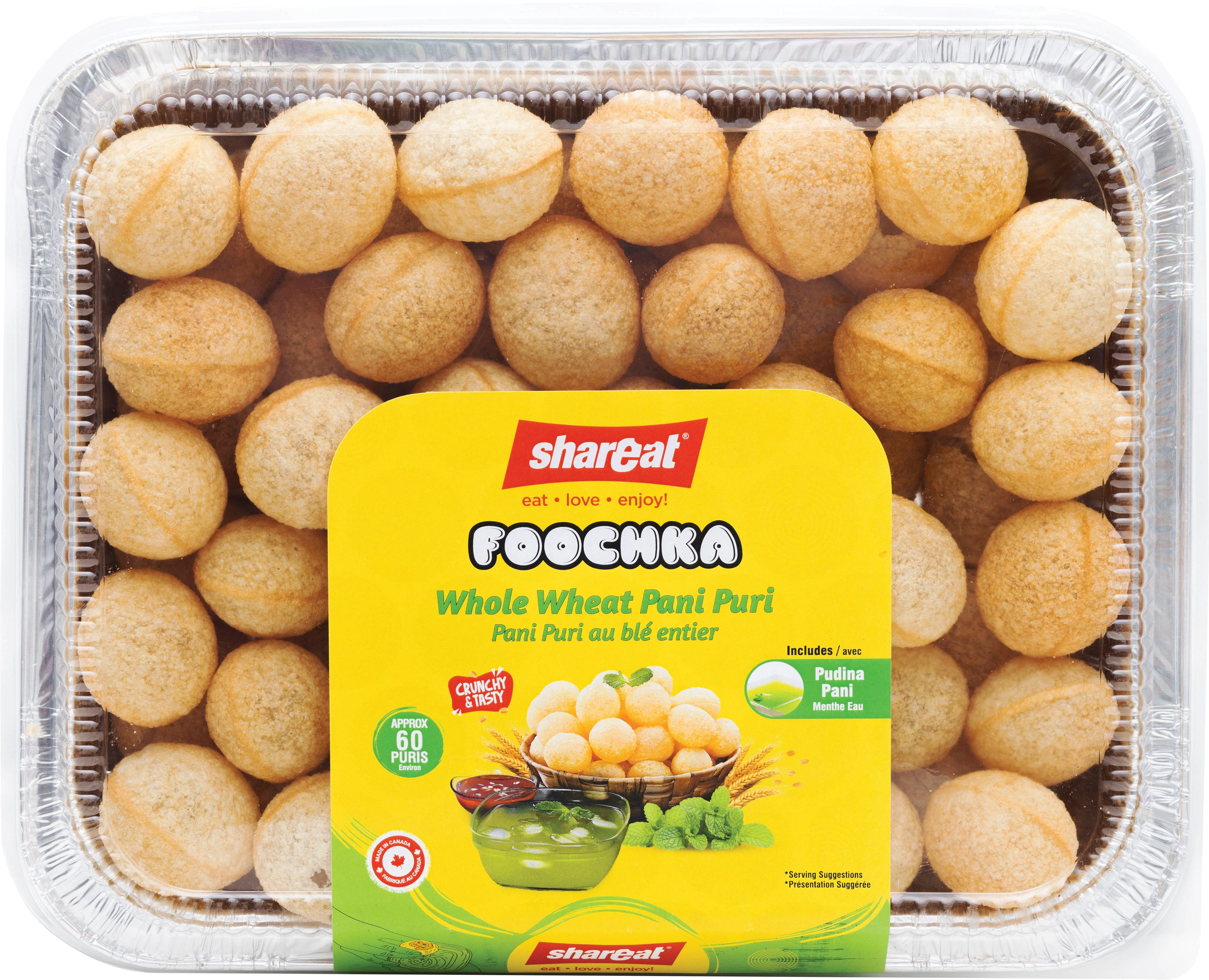
Shareat Foochka Pani Puri Mint 170g in Bulk - Delivery Across Canada
Shareat foochka pani puri mint is a concentrated flavour base packaged in 170 g containers, with cases containing 8 units (1.36 kg total). This product is formulated for preparing the traditional mint-flavoured water (pani) used in the popular South Asian street food dish pani puri (also known as golgappa or foochka). Available for delivery across Canada.
Common Commercial Applications
Restaurants, food trucks, catering operations, and food service establishments serving South Asian cuisine use foochka pani puri bases to prepare the tangy, spiced water that accompanies the crispy semolina shells. The concentrated format allows for consistent flavour preparation across multiple batches.
Typical users include:
- Indian, Pakistani, and Bangladeshi restaurants with chaat menus
- Food trucks and street food vendors specializing in South Asian snacks
- Catering companies handling cultural events and celebrations
- Quick-service restaurants offering fusion or international street food
- Cafes and eateries with diverse menu offerings
- Institutional kitchens serving multicultural populations
- Retail food operations with prepared food sections
- Buffet restaurants featuring Indian street food stations
- Event venues and banquet halls with ethnic cuisine options
- Ghost kitchens and delivery-focused operations
Product Specifications and Characteristics
Packaging specifications:
- Weight per unit: 170 g
- Case quantity: 8 units (1.36 kg total)
- Flavour profile: Mint-based foochka pani concentrate
- Product type: Concentrated flavour base requiring dilution
Functional characteristics:
- Concentrated format requiring water dilution before service
- Mint flavour characteristic of foochka-style pani puri
- Designed for commercial batch preparation
- Requires refrigeration after opening (verify product label)
- Dilution ratios vary based on desired intensity (follow manufacturer guidelines)
The 170 g container provides a manageable size for portion control and inventory rotation in commercial settings.
Traditional Pani Puri Preparation
Pani puri is a popular South Asian street food consisting of hollow, crispy spheres filled with spiced water, potatoes, chickpeas, and chutneys. The "pani" (water) component is essential to the dish's flavour profile.
Key components in pani puri service:
- Hollow puri shells (fried semolina or wheat shells)
- Flavoured pani (spiced water) - mint, tamarind, or combination varieties
- Potato filling (boiled and spiced)
- Chickpeas or other legumes
- Sweet and spicy chutneys
- Fresh garnishes (coriander, sev)
Service considerations:
- Pani puri is typically assembled and consumed immediately
- The pani must be prepared fresh and kept chilled
- Shells become soggy quickly once filled, requiring immediate service
- Often served as an interactive dining experience where customers assemble or staff prepare to order
Preparation and Usage
Concentrated foochka pani bases require dilution with water:
General preparation steps:
- Follow manufacturer's dilution instructions (ratios vary by product)
- Mix concentrate with cold water thoroughly
- Chill prepared pani before service
- Taste and adjust seasoning or dilution as needed
- Keep refrigerated during service
Operational considerations:
- Prepare pani in batches based on service volume
- Keep pani chilled to maintain freshness and flavour
- Use within timeframe specified by manufacturer after preparation
- Adjust dilution based on customer preference and feedback
- Store concentrate according to label instructions
Mint vs. Other Pani Varieties
Different regional variations exist for pani puri water:
Mint pani (this product):
- Fresh, cooling mint flavour
- Typically includes spices like cumin, black salt, and chaat masala
- Green colour from mint and coriander
- Popular in certain regional preparations
- Pairs well with potato and chickpea fillings
Tamarind pani:
- Sweet and tangy flavour profile
- Brown colour from tamarind pulp
- Often combined with jaggery or sugar
- Common in other regional variations
Mixed pani:
- Combination of mint and tamarind flavours
- Offers balanced sweet-sour-spicy profile
- Some operations offer multiple pani options
Many establishments offer more than one pani variety, allowing customers to choose their preferred flavour or try combinations.
Storage and Handling
Proper storage maintains product quality:
- Store unopened containers in a cool, dry place
- Refrigerate after opening (verify product label requirements)
- Use clean utensils to dispense concentrate to prevent contamination
- Seal container tightly after each use
- Check expiration dates and rotate inventory accordingly
- Prepared pani should be kept refrigerated and used within the recommended timeframe
- Implement first-in, first-out rotation practices
Handling considerations:
- Small container size facilitates portion control
- Case packing allows for backup inventory without excessive storage requirements
- Individual units enable flavour variety without large commitments
Operational Considerations for Commercial Buyers
Businesses using foochka pani concentrates should account for several practical factors:
Volume planning:
- Calculate diluted yield based on manufacturer's instructions
- Estimate based on typical pani puri orders and portion sizes
- Consider peak service times and batch preparation needs
Menu integration:
- Pani puri works well as an appetizer or snack item
- Can be offered as part of chaat platters
- Popular during lunch service and as street food-style offerings
- Seasonal or special event menu features
Quality consistency:
- Concentrated format provides standardised flavour across batches
- Reduces variability compared to made-from-scratch preparations
- Simplifies training for kitchen staff
Cost analysis:
- Calculate cost per serving based on dilution ratio
- Compare concentrate costs against scratch preparation (ingredients and labour)
- Factor in consistency and time savings
Frequently Asked Questions
1. How much water do I add to the concentrate?
Dilution ratios vary by manufacturer and product formulation. Follow the specific instructions provided on the Shareat packaging. Typical ratios for pani concentrates range from 1:3 to 1:5 (concentrate to water), but verify with the product label.
2. How long does prepared pani last?
Once diluted, prepared pani should be used within the timeframe specified by the manufacturer, typically within 1-2 days when refrigerated. Check the product label for specific guidance and monitor for any changes in taste or appearance.
3. Can I adjust the flavour intensity?
Yes, dilution ratios can be adjusted based on preference. Start with the manufacturer's recommended ratio and adjust in small increments. More water creates a milder flavour; less water intensifies the taste.
4. Does this product require refrigeration?
Storage requirements vary by product formulation. Check the Shareat packaging for specific storage instructions. Unopened concentrates may be shelf-stable, while opened containers typically require refrigeration.
5. Is this product ready to use?
No, this is a concentrated base that must be diluted with water before use. It is not ready-to-serve in its concentrated form.
6. How many servings does one container make?
Serving yield depends on the dilution ratio used and portion size per serving. A 170 g concentrate diluted at a 1:4 ratio produces approximately 850 g (850 ml) of prepared pani. If each pani puri serving uses approximately 50-75 ml of pani, one container yields roughly 11-17 servings after dilution.
7. Can I mix this with tamarind pani?
Yes, some operations combine mint and tamarind pani varieties to create unique flavour profiles. Experiment with ratios to find preferred combinations for your menu.
8. What ingredients are typically in mint foochka pani?
While formulations vary by manufacturer, mint pani concentrates typically include mint, coriander, green chillies, cumin, black salt (kala namak), chaat masala, and other spices. Check the product label for the complete ingredient list.
9. How should I store leftover prepared pani?
Store prepared pani in clean, covered containers in refrigeration. Use within the timeframe recommended by the manufacturer. Discard if there are any signs of spoilage or off-odours.
10. Can this be used for other dishes besides pani puri?
While formulated specifically for pani puri, some operations experiment with using diluted mint pani as a flavour component in other chaats or as a unique beverage base. The intended use is for traditional pani puri preparation.
Businesses purchasing Shareat foochka pani puri mint concentrate should evaluate typical pani puri service volume, storage capacity for both concentrate and prepared pani, and customer preference for mint versus other flavour profiles. The 170 g container format and case packing of 8 units provide flexibility for operations testing the product or maintaining regular stock. Understanding dilution requirements, establishing proper refrigeration practices for prepared pani, and training staff on consistent preparation methods helps maintain flavour quality and operational efficiency across Canadian foodservice operations.
Description
Shareat Foochka Pani Puri Mint 170g in Bulk - Delivery Across Canada
Shareat foochka pani puri mint is a concentrated flavour base packaged in 170 g containers, with cases containing 8 units (1.36 kg total). This product is formulated for preparing the traditional mint-flavoured water (pani) used in the popular South Asian street food dish pani puri (also known as golgappa or foochka). Available for delivery across Canada.
Common Commercial Applications
Restaurants, food trucks, catering operations, and food service establishments serving South Asian cuisine use foochka pani puri bases to prepare the tangy, spiced water that accompanies the crispy semolina shells. The concentrated format allows for consistent flavour preparation across multiple batches.
Typical users include:
- Indian, Pakistani, and Bangladeshi restaurants with chaat menus
- Food trucks and street food vendors specializing in South Asian snacks
- Catering companies handling cultural events and celebrations
- Quick-service restaurants offering fusion or international street food
- Cafes and eateries with diverse menu offerings
- Institutional kitchens serving multicultural populations
- Retail food operations with prepared food sections
- Buffet restaurants featuring Indian street food stations
- Event venues and banquet halls with ethnic cuisine options
- Ghost kitchens and delivery-focused operations
Product Specifications and Characteristics
Packaging specifications:
- Weight per unit: 170 g
- Case quantity: 8 units (1.36 kg total)
- Flavour profile: Mint-based foochka pani concentrate
- Product type: Concentrated flavour base requiring dilution
Functional characteristics:
- Concentrated format requiring water dilution before service
- Mint flavour characteristic of foochka-style pani puri
- Designed for commercial batch preparation
- Requires refrigeration after opening (verify product label)
- Dilution ratios vary based on desired intensity (follow manufacturer guidelines)
The 170 g container provides a manageable size for portion control and inventory rotation in commercial settings.
Traditional Pani Puri Preparation
Pani puri is a popular South Asian street food consisting of hollow, crispy spheres filled with spiced water, potatoes, chickpeas, and chutneys. The "pani" (water) component is essential to the dish's flavour profile.
Key components in pani puri service:
- Hollow puri shells (fried semolina or wheat shells)
- Flavoured pani (spiced water) - mint, tamarind, or combination varieties
- Potato filling (boiled and spiced)
- Chickpeas or other legumes
- Sweet and spicy chutneys
- Fresh garnishes (coriander, sev)
Service considerations:
- Pani puri is typically assembled and consumed immediately
- The pani must be prepared fresh and kept chilled
- Shells become soggy quickly once filled, requiring immediate service
- Often served as an interactive dining experience where customers assemble or staff prepare to order
Preparation and Usage
Concentrated foochka pani bases require dilution with water:
General preparation steps:
- Follow manufacturer's dilution instructions (ratios vary by product)
- Mix concentrate with cold water thoroughly
- Chill prepared pani before service
- Taste and adjust seasoning or dilution as needed
- Keep refrigerated during service
Operational considerations:
- Prepare pani in batches based on service volume
- Keep pani chilled to maintain freshness and flavour
- Use within timeframe specified by manufacturer after preparation
- Adjust dilution based on customer preference and feedback
- Store concentrate according to label instructions
Mint vs. Other Pani Varieties
Different regional variations exist for pani puri water:
Mint pani (this product):
- Fresh, cooling mint flavour
- Typically includes spices like cumin, black salt, and chaat masala
- Green colour from mint and coriander
- Popular in certain regional preparations
- Pairs well with potato and chickpea fillings
Tamarind pani:
- Sweet and tangy flavour profile
- Brown colour from tamarind pulp
- Often combined with jaggery or sugar
- Common in other regional variations
Mixed pani:
- Combination of mint and tamarind flavours
- Offers balanced sweet-sour-spicy profile
- Some operations offer multiple pani options
Many establishments offer more than one pani variety, allowing customers to choose their preferred flavour or try combinations.
Storage and Handling
Proper storage maintains product quality:
- Store unopened containers in a cool, dry place
- Refrigerate after opening (verify product label requirements)
- Use clean utensils to dispense concentrate to prevent contamination
- Seal container tightly after each use
- Check expiration dates and rotate inventory accordingly
- Prepared pani should be kept refrigerated and used within the recommended timeframe
- Implement first-in, first-out rotation practices
Handling considerations:
- Small container size facilitates portion control
- Case packing allows for backup inventory without excessive storage requirements
- Individual units enable flavour variety without large commitments
Operational Considerations for Commercial Buyers
Businesses using foochka pani concentrates should account for several practical factors:
Volume planning:
- Calculate diluted yield based on manufacturer's instructions
- Estimate based on typical pani puri orders and portion sizes
- Consider peak service times and batch preparation needs
Menu integration:
- Pani puri works well as an appetizer or snack item
- Can be offered as part of chaat platters
- Popular during lunch service and as street food-style offerings
- Seasonal or special event menu features
Quality consistency:
- Concentrated format provides standardised flavour across batches
- Reduces variability compared to made-from-scratch preparations
- Simplifies training for kitchen staff
Cost analysis:
- Calculate cost per serving based on dilution ratio
- Compare concentrate costs against scratch preparation (ingredients and labour)
- Factor in consistency and time savings
Frequently Asked Questions
1. How much water do I add to the concentrate?
Dilution ratios vary by manufacturer and product formulation. Follow the specific instructions provided on the Shareat packaging. Typical ratios for pani concentrates range from 1:3 to 1:5 (concentrate to water), but verify with the product label.
2. How long does prepared pani last?
Once diluted, prepared pani should be used within the timeframe specified by the manufacturer, typically within 1-2 days when refrigerated. Check the product label for specific guidance and monitor for any changes in taste or appearance.
3. Can I adjust the flavour intensity?
Yes, dilution ratios can be adjusted based on preference. Start with the manufacturer's recommended ratio and adjust in small increments. More water creates a milder flavour; less water intensifies the taste.
4. Does this product require refrigeration?
Storage requirements vary by product formulation. Check the Shareat packaging for specific storage instructions. Unopened concentrates may be shelf-stable, while opened containers typically require refrigeration.
5. Is this product ready to use?
No, this is a concentrated base that must be diluted with water before use. It is not ready-to-serve in its concentrated form.
6. How many servings does one container make?
Serving yield depends on the dilution ratio used and portion size per serving. A 170 g concentrate diluted at a 1:4 ratio produces approximately 850 g (850 ml) of prepared pani. If each pani puri serving uses approximately 50-75 ml of pani, one container yields roughly 11-17 servings after dilution.
7. Can I mix this with tamarind pani?
Yes, some operations combine mint and tamarind pani varieties to create unique flavour profiles. Experiment with ratios to find preferred combinations for your menu.
8. What ingredients are typically in mint foochka pani?
While formulations vary by manufacturer, mint pani concentrates typically include mint, coriander, green chillies, cumin, black salt (kala namak), chaat masala, and other spices. Check the product label for the complete ingredient list.
9. How should I store leftover prepared pani?
Store prepared pani in clean, covered containers in refrigeration. Use within the timeframe recommended by the manufacturer. Discard if there are any signs of spoilage or off-odours.
10. Can this be used for other dishes besides pani puri?
While formulated specifically for pani puri, some operations experiment with using diluted mint pani as a flavour component in other chaats or as a unique beverage base. The intended use is for traditional pani puri preparation.
Businesses purchasing Shareat foochka pani puri mint concentrate should evaluate typical pani puri service volume, storage capacity for both concentrate and prepared pani, and customer preference for mint versus other flavour profiles. The 170 g container format and case packing of 8 units provide flexibility for operations testing the product or maintaining regular stock. Understanding dilution requirements, establishing proper refrigeration practices for prepared pani, and training staff on consistent preparation methods helps maintain flavour quality and operational efficiency across Canadian foodservice operations.